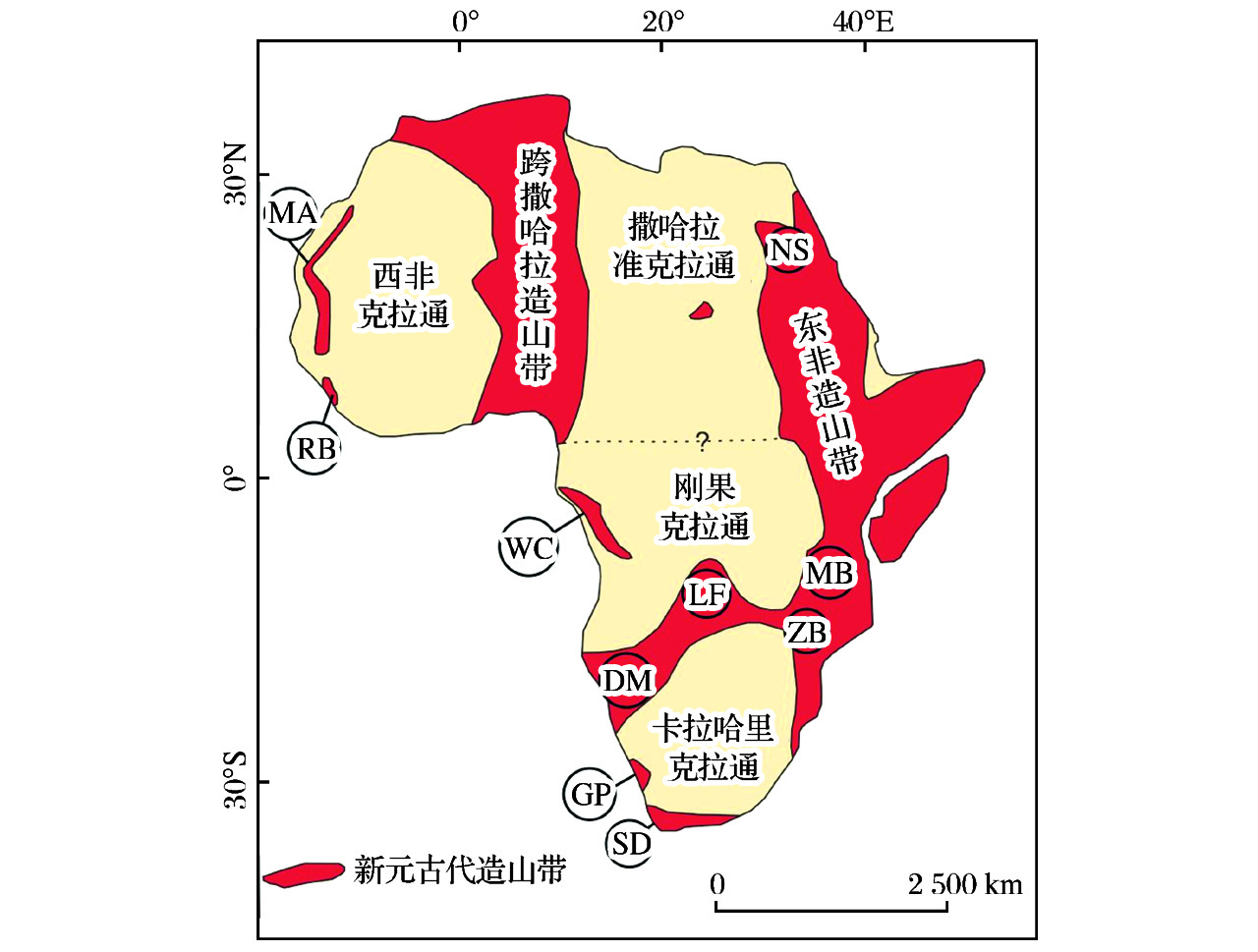
Africa is the most important gold producing area in the world,and one of the hot spots to attract gold exploration investment as well.Based on the systematic collection and processing of the advances of the previous research on typical gold deposits and regional metallogenesis in the African continent,the spatial and temporal distribution of gold deposits in the African continent is summarized briefly in this article,which made the achievements below.The African continent consists mainly of four ancient cratons (i.e.Kalahari Craton,West Africa Craton,Congo Craton,and Sahara Meta-Craton) and Neoproterozoic orogenic belts developed around these cratons,as well as some Mesozoic basins developed on the cratons.The gold deposits predominantly occur in the ancient craton,especially in the Kalahari Craton in southern Africa and West African Craton in north-western Africa,where are the world famous gold producing areas.A small proportion of gold deposits are distributed in the Neoproterozoic orogenic belts,such as the Nubian Shield,and other Pan-African orogenic belts.There are many types of gold deposits in African,including conglomerate,orogenic,VMS,intrusion-related,porphyry,epithermal and IOCG types,with the former two being the most important types.The ore-forming age of gold deposits in Africa is mainly concentrated in three periods,i.e.Archean,Paleoproterozoic and Neoproterozoic.The enrichment of huge-sized conglomerate-type gold deposits in the Witwatersrand Basin of South Africa may be mainly related to their paleo-sedimentary environment,i.e.the alluvial braided river plain,while the gold enrichment in West African Craton,as the most important Paleoproterozoic gold region in the world,mainly attributes to the large amount of carbonaceous in the strata.Although many world-class gold deposits have been found in the African continent,their prospecting potential remains significant,especially in the search for orogenic gold deposits,as both the ancient craton and the Neoproterozoic orogenic belt occurring around the craton are favorable tectonic environments for the formation of orogenic gold deposits.For the gold exploration in the African continent,it is suggested that not only pay much attention to the deep prospecting of discovered gold deposits,but also to searching for the semi-buried and buried deposits,especially in the shallow covered areas of West African Craton and Congo Craton.By means of advanced geophysical,geochemical and remote sensing,the breakthrough of gold prospecting is expected.
Liumei gold deposit is located in the northeast of Dapingtianshan stock,Guigang,Guangxi Province.According to mineral composition and pulse cutting relation,the deposit hydrothermal activity process is divided into four stages:(1)quartz-pyrite stage;(2)pyrite arsenopyrite-quartz stage;(3)galena-sphalerite-chalcopyrite-tennantite-ankerite-quartz stage;(4)quartz-ankerite stage.The second stage as the main metal-logenic stage.The main gold carriers are arsenopyrite and pyrite. EPMA analysis shows that Au mainly exists in the form of “invisible” submicroscopic-supermicroscopic inclusion gold.Fluid inclusion test shows that the inclusions in quartz or calcite are mainly gas-liquid two-phase,the average temperature in the main metallogenic stage is about 181 ℃,the average salinity [w(NaCl)] is 9.36%,and the density is 0.946 g/cm3, indicating that the ore-forming fluid is low-temperature,low-salinity,low-density fluid.The hydrogen and oxygen isotopic composition (δD value between -73‰~-57‰,

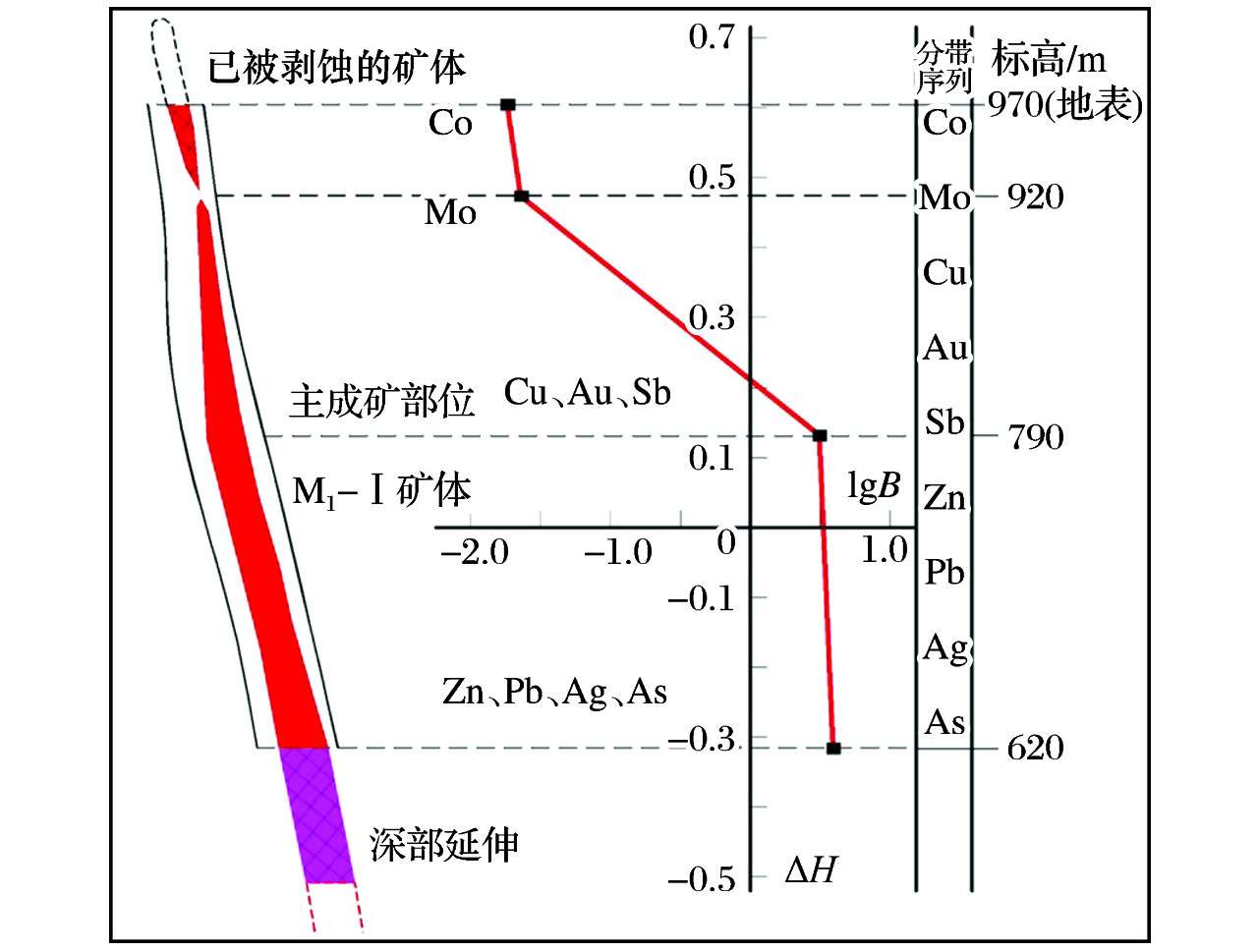
Dongjianian silver deposit is the only large deposit found in the south metallogenic belt of Xiao-qinling ore-gathering area. In order to coordinate with the smooth development of the deep exploration of the deposit,the change rule of the useful elements in the vertical direction of the deposit was understood,and the primary halo geochemical method was adopted to determine the change trend of the deep orebody by studying the primary halo characteristics of the typical ore deposit profile. By the analysis of mathematical statistics,and Ag has significant correlation elements Au,Cu,Pb,Zn,As,Sb,W,Ag content of elements is the main source of F1 factor As,Ag,Pb,Au,Zn,Sb element combination,is the main ore-forming elements combination,As,Sb element combination is a typical low temperature elements,they were placed in the same combination as the medium temperature elements of Pb,Zn,Ag and Au,explain Dongjianian silver deposit has many times characteristics,ore-forming process secondary source is F2,F4 factor. Finally,9 elements such as As,Sb,Ag,Au,Cu,Pb,Zn,Co and Mo were determined indicator elements. Among them,As and Sb are indicators of leading edge halo,Ag,Au,Cu,Pb and Zn are indicators of near-ore halo,and Co and Mo are indicators of tail halo. The primary halo axial zoning sequence of the main orebody from top to bottom determined by the zoning index is Co-Mo -Cu-Au-Sb-Zn-Pb-Ag-As,showing the phenomenon of “opposite direction zoning”.Combined with the change characteristics of primary halo geochemical parameters,the study on the denudation degree of orebody and the ideal model,it is predicted that the M1-I main orebody still has a large extension to the depth. The research results can be used as a reference for the research and decision of the deep trend of the same type of mineralized geological body in the region.
Defects in rocks make their physical properties anisotropic.When subjected to external force,the defect will crack,expand and even destroy.Therefore,it is very important to study its failure behavior to predict the instability of engineering structure.Previous studies are more concentrated on the evolution process of single fracture or non intersecting multi fracture,however,rock fracture often exists in the form of intersecting multi fracture in practical engineering.Based on RMT-150B,the cross fracture rock samples (150 mm×200 mm×45 mm) with different fracture inclination were prepared in the laboratory,and the uniaxial compression test was carried out with the displacement controlled loading mode of 0.01 mm/s.The results show that the peak strength and modulus of elasticity of the cross fracture specimen are lower than that of the intact specimen.The peak strength,modulus of elasticity and crack initiation stress increase first and then decrease with the increase of fracture inclination.In order to make up for the shortcomings of laboratory test technology in reflecting the macro and micro morphology of cross cracks,PFC2D numerical simulation technology was used to calibrate the micro parameters of the numerical model by comparing the deformation and failure characteristics of the complete specimen.The results of numerical simulation show that the relationship between peak strength,modulus of elasticity,initial crack stress and crack inclination is basically consistent with the results of laboratory tests.From the process of crack evolution,it is observed that the inclination angle of 0° is the simultaneous cracking from the tip of the primary and secondary cracks,the inclination angle of 30° is the crack initiation from the tip of the primary crack,and the inclination angle of 45° and 60° are the cracks from the tip of the secondary crack.The number curves of microcracks are divided into four stages,namely quiescent period, slow increase period, mid-term increase period, and most active period,and the growth rate of the latter stage is always higher than that of the former stage,the change characteristics of cracks are different in different stages.It can be clearly seen from the displacement field that when the inclination angles are 0°,30° and 45°respectively,the specimen is the diagonal shear failure controlled by the secondary fracture.When the inclination angle is 60°,the specimen is mainly the shear failure controlled by the main fracture.

In industrial production,dynamic load rock breaking equipment is widely used in metal and non-metal mines,such as drill,downhole drill and cable drill.Mechanical rock breaking is often faced with such problems as low crushing efficiency,poor crushing effect and expensive equipment.Therefore,it is necessary to find an efficient,simple and safe method to break the rock.Microwave-assisted percussive rock breaking is an important means to break hard rock quickly.It is of great theoretical and practical significance to study the impact resistance of rock by microwave radiation.In this paper,an industrial microwave oven was used to test the radiation of sandstone with different power and time.The wave velocity of sandstone before and after radiation were measured and the porosity of rock before and after radiation were measured by nuclear magnetic resonance equipment.Then,the dynamic compressive mechanical strength of rock was tested by SHPB method,and the rock failure process and characteristics were recorded by high-speed camera.The results show that under the microwave radiation,the sandstone heating speed is very fast.Under the radiation power of 5 kW,the sandstone heating rate reaches 1.29 ℃/s,and under the condition of 3 kW,it reaches 1.04 ℃/s.After the microwave radiation,the wave velocity of sandstone decrease continuously and the porosity increase continuously.After 5 kW radiation for 4 min,the wave velocity decreases by 34% and the porosity increases by nearly 70%.The dynamic compressive strength of sandstone is also continuously reduced,and after 5 kW and 3 kW radiation for 4 min,it decreases by 60.4 MPa and 44 MPa respectively.Under the action of impact stress,rock shows radial failure modes and axial failure modes.The results show that microwave radiation can rapidly heat up sandstone.Because of the thermal stress,cracks are generated inside the sample then spread,which makes the wave velocity decrease and the porosity increase and the dynamic compressive strength decrease drastically.

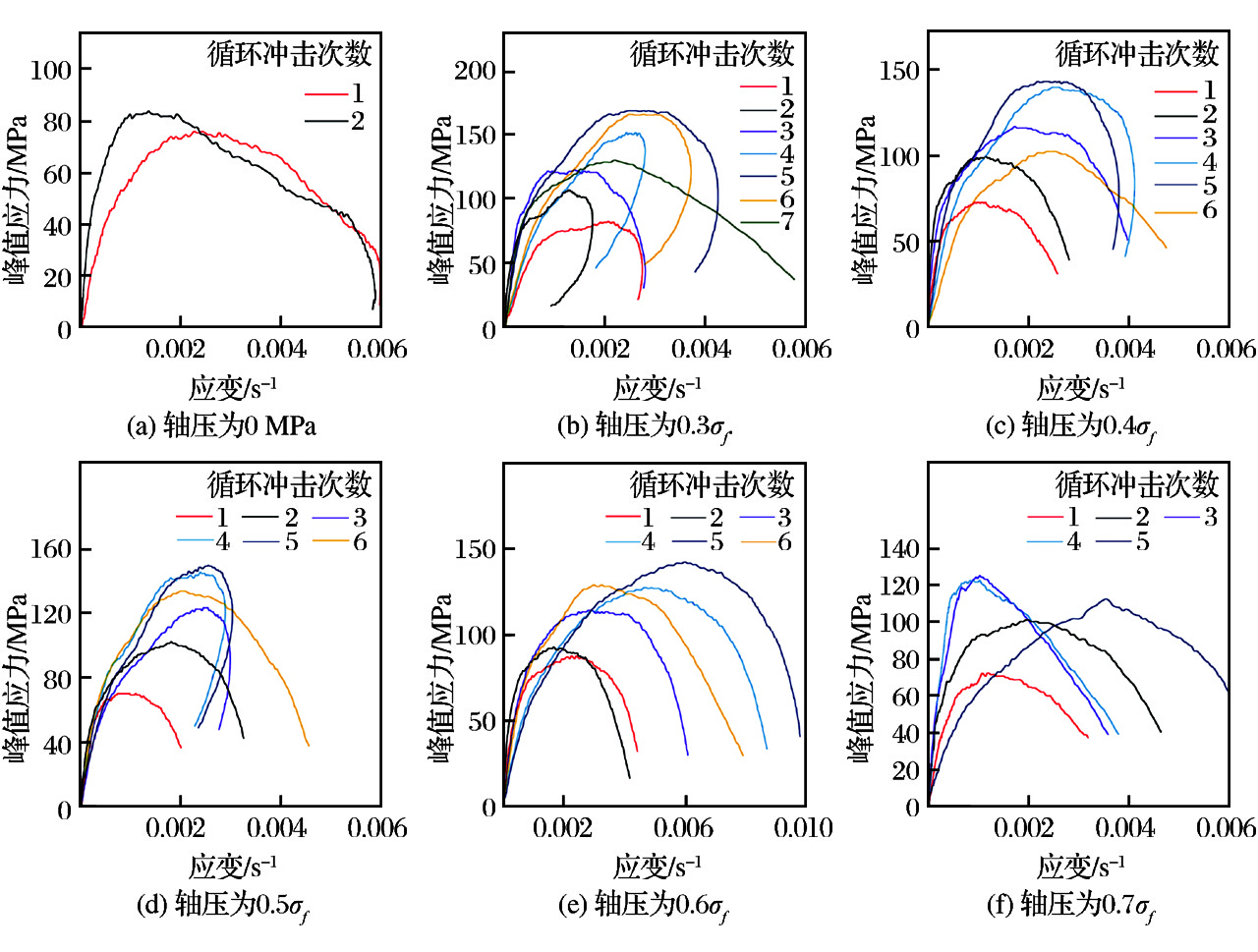
Along with the development of underground engineering in recent decades,the underground en-gineering excavation depth and the construction scale is increasing.In the deep-layer rock engineering activities,the researchers observed that deep rocks are subjected to huge in-situ stress in all directions,which has a non-negligible effect on the mechanical properties of the rock.In order to ensure the safety of underground engineering construction,technician must solve the deep strata of rock “high geostress” and so on.With the deepening of underground engineering,due to the different stress conditions of rocks at different depths,there is a difference between the horizontal axial pressure and the surrounding rock pressure under different depths.In addition,the implementation and development of underground engineering activities are often carried out through drilling and blasting methods,explosive blasting,mechanical disturbance,manual excavation,etc.,each time the development of the project will have different degrees of disturbance and damage to the surrounding rock.In this experiment,the improved SHPB test device was used to study the mechanical properties of a complete granite rock specimen with transverse holes under the same axial pressure level and different axial pressure levels.Unequal amplitude cyclic impact tests on rock samples under the combined action of axial compression and impact load was conducted.The research results are of great significance to protect and maintain the stability of surrounding rock around the roadway in the future underground engineering construction.In the impact test,a certain level of axial pressure was applied to each sample in advance,and the axial pressure level was 0 MPa,0.3 σf,0.4 σf,0.5 σf,0.6 σf and 0.7 σf(σf is the uniaxial compressive strength, MPa), respectively.During the implementation of axial pressure,the axial pressure is controlled by a manual oil pump to adjust the axial pressure to achieve a constant axial pressure load.In order to avoid the next impact failure of the samples under different coaxial pressure,a lower pressure of 0.45 MPa was defined in this test through several adjustment tests.Each sample was impacted by the initial pressure once.After the end of one cycle,the pressure of the previous one was increased by 0.05 MPa,until all samples were damaged by impact.Test results show that under different impact load step by step,the peak stress increased with the increase of the number of shock load increases first,then decrease,and increases with the increase of average strain rate.Elastic modulus increase first and then decrease with the increase of impact times performance.Under different axial pressure levels,the impact failure modes of the specimens are all axial splitting failure modes.As the strain rate increases,the fracture surface gradually increases,the degree of fragmentation increases,and the fragment size decreases.When the strain rate is small,the crushing effect is not obvious,and when the strain rate is large,the crushing effect is significant.
Several negative factors like soil arching effects,redistribution of stress,dispersion of stress and so on are easily arise on the force surface during the rigid loading calibrations of earth pressure cells in sand soil due to the larger difference in the physical and mechanical properties between earth pressure cells’ material and sand soil,which result in the poor application of rigid loading method in the calibration tests.To solve above problems,the author designed a new pressure cells calibration method—Stress concentration method based on the consideration of ??reducing the loading area and the space of the sand soil.The author made calibration tests in sand soil for three different sale earth pressure cells by using two different methods:The rigid loading and stress concentration method,and draw calibration curves of methods A,B and gas pressure calibration based on the results of two above methods and the manufacturer’s gas calibration results.In order to judge the advantages and disadvantages of the three calibration methods,the author compared the goodness of fit,calibration parameter and dispersion rate of data of the results of two methods and the gas calibration.The result shows that the linear correlation coefficients of stress concentration method’s calibration curves are all greater than 0.99,which means the calibration curves obtained by the new test method all have a low dispersion rate,so the its calibration results meet the accuracy requirements of the indoor test and have field application value.But the calibration coefficients of two sand pressure calibration method are significantly different from the gas pressure calibration method,which proves the existing of the soil arching during the earth cells working in the sand soil and the necessary to make a sand pressure calibration test.It is found that the calibration parameter of the rigid loading test is smaller than that of the gas standard but the calibration parameter of the stress concentration method is larger,which indicates that people can reduce the effect of soil arching and lateral stress on the sensor by reducing the soil space and the earth cell’s force area,so that make the stress on sensor surface more concentrated to avoid uneven distribution of stress.At last of the thesis,according to conclusions of test and analysis,the authors advice to use the stress concentration method as calibration tests of vibrating wire earth pressure cells in a soft sand environment with a large particle porosity.

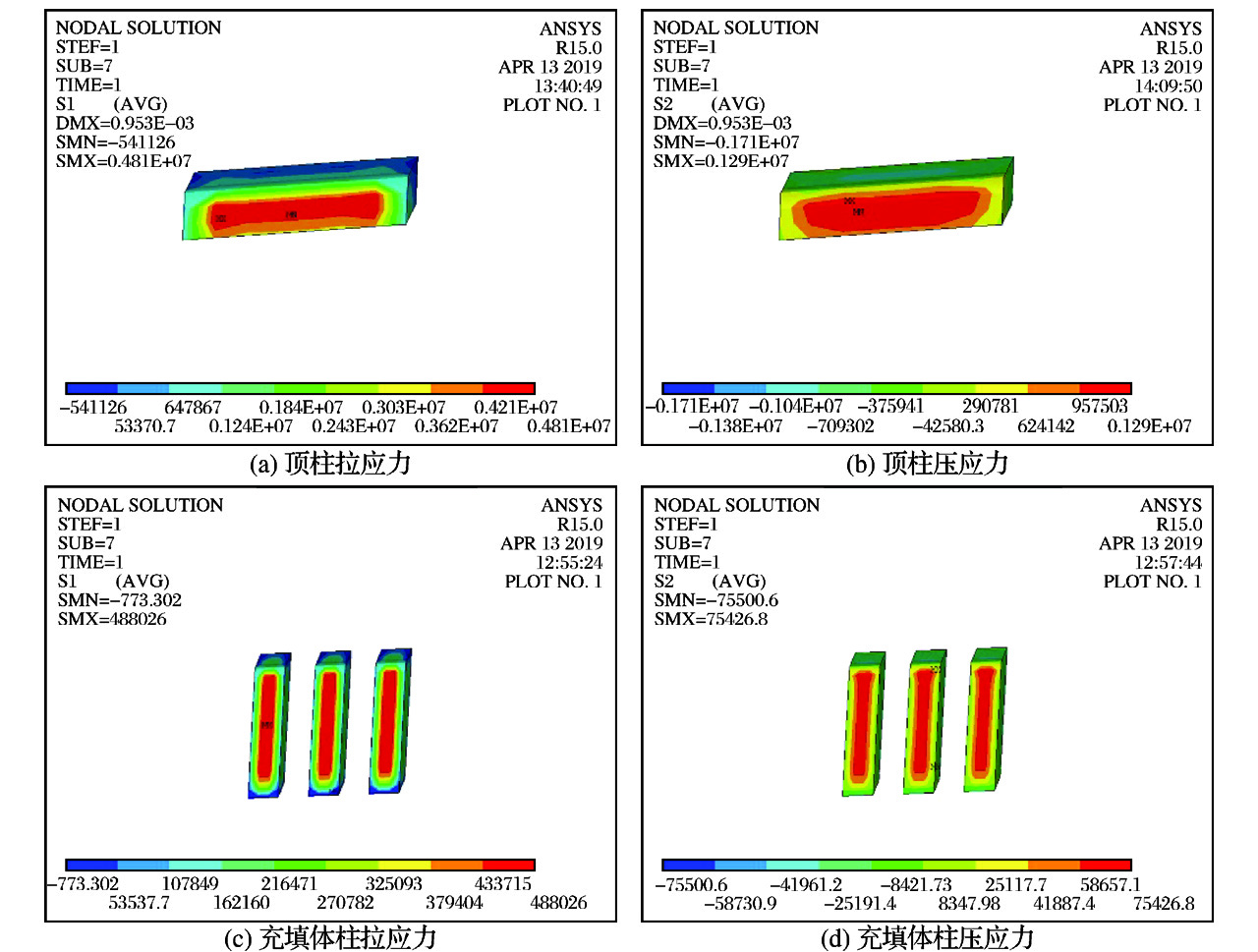
Rangjialong mine is a continuous mining mine,and a large number of mined-out areas are left over from years of open-field mining,which are prone to caving and collapse,thus inducing large-scale ground pressure activities.A large number of pillars are left in the open field method,and the loss of pillar resources is serious.At the same time,tailings pond design dam crest elevation of 165 m,the current has been discharged to 156 m,tailings pond storage capacity is close to saturation,the mine is facing the dilemma of nowhere to discharge the tailings.In order to solve the above problems,the mine will change the current method to the two-step stope backfilling method,which is urgent to determine the safe and reasonable stope structure parameters,mainly considering stope span.In this study,finite element simulation software was used to establish 5 stope structure models with different spans,with a gradient of 5 m and a span range of 15~35 m.The two-step stoping process is simulated,and the stress distribution and displacement variation of the two step stoping pillar and backfill artificial pillar were obtained,and the ultimate strength of the stope rock (or backfill) was compared,and the stope structure parameters were optimized.According to the results of simulation,the value of the tensile stress of the artificial pillar and backfill in each scheme is less than the allowable tensile stress,the safety coefficient of the tensile stress decreases with the increase of the stope width,and the minimum value is close to 2.0.The roof column and pillar under each simulation scheme are not in a state of instability.When the stope span is between 15 m and 25 m,the simulated compressive stress value of the corresponding model is in the critical state or stable state,the compressive stress safety coefficient is greater than 1.3,and the Y direction displacement is uniform.The simulated compressive stress value of the roof pillar is very close to the allowable value when the stope span is greater than 30 m,the roof column is prone to compressive stress failure.The overall displacement change in the Y direction of the filling artificial pillar under 5 schemes does not exceed 10 mm,which is safe and controllable.In order to ensure the economic benefits of the mine,the reasonable stope span is finally determined to be 20~25 m,the stope width is 40 m and the stage height is 80 m.It can provide theoretical support for the recovery of residual ore resources in mines with similar engineering geological conditions.
Based on the panel mining of Dahongshan Copper Mine,this paper attempts to solve the damage problem of adjacent cemented pillars.In order to determine the damage range of cement piles in the blasting and recovery of underground mines,the on-site cemented backfill of Dahongshan Copper Mine and the same strength of the pillar simulation materials were used to carry out the mine column blasting simulation test in the underground abandoned but safe roadway.Ultrasonic testing and post-explosion apparent crack observation method were used to investigate the damage law of cemented backfill under blasting load from two aspects of damage degree and crack propagation.The results show that the damage degree of the cemented backfill at the blasting distance R is 45~125 cm that is higher than that of the blasting core R is 145~205 cm;The crack at the cemented backing can be extended to 71.5 cm;In the model,the damage of cemented backfill is divided into stable zone,damage zone and failure zone.The damage degree of cemented backfill is 0≤D<0.07 in the stable zone,0.07≤D≤0.22 in the damaged zone,and 0.22<D≤1 in the failure zone.

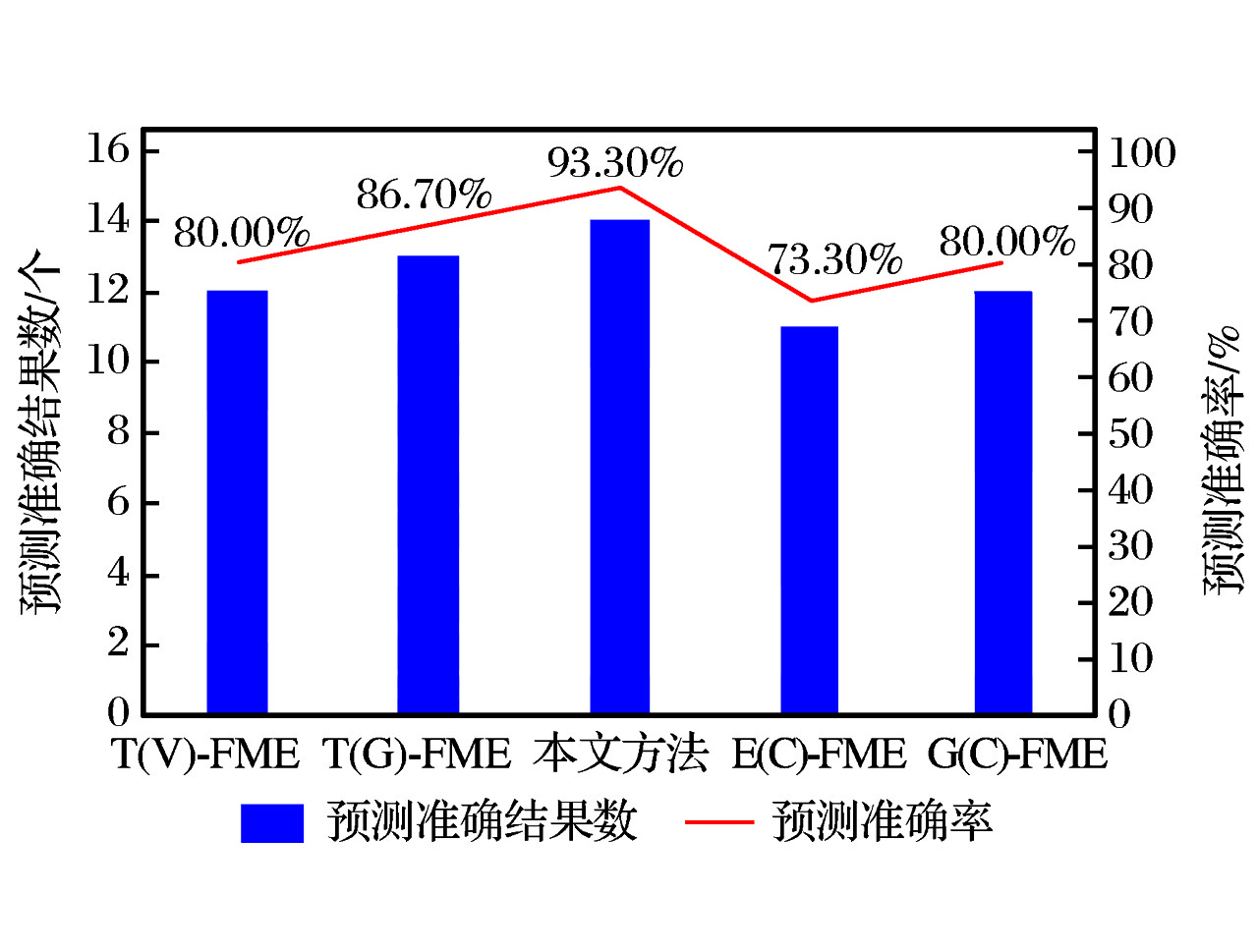
Due to the limitations of its own operating conditions,many multi-index comprehensive evaluation methods of rockburst are liable to cause low accuracy,and there is currently no unified prediction standard.In order to improve the accuracy of rockburst tendency prediction model,we must ensure that the index weighting method and the selection of the correlation function are more comprehensive and reasonable then a prediction model of T-FME rockburst tendency was established.According to the mechanism and condition of rock ex-plosion,brittle coefficient,tangential stress index and elastic strain energy index were selected as the evaluation indexes from three aspects:Surrounding rock stress,lithological conditions and surrounding rock energy storage.On the one hand,the excessive subjectivity of subjective judgments will affect the objectivity of index weights,on the other hand,in the case of limitated information,entropy weight method excessively depends on the degree of index variation will lead to bias.In order to make up for these deficiencies,the principle of minimum discriminant information was introduced,and the indicators were combined and weighted by combining the subjective and objective weights that the subjective weight of the indicator is determined by the ordinal relationship analysis method and the objective weight of the indicator was determined by the conventional entropy weight method which has been modified by the vague entropy.The T-FME rockburst propensity pre-diction model is based on the fuzzy matter-element analysis method and combines the principles of the TOPSIS method to construct the ideal fuzzy matter-element.The concept of ideal difference-square compound fuzzy matter-element was proposed.Post progress calculation has been optimized,the closeness compound fuzzy matter element was calculated.Finally,the degree of rockburst tendency can be obtained through the closeness analysis.Using the data of 15 domestic and foreign engineering rockburst examples to test the T-FME model and other 4 rockburst propensity prediction models that use different weighting methods and correlation degree functions,and these rockburst propensity prediction models are the ideal fuzzy matter element method based on Vague entropy weight,the ideal fuzzy matter-element method based on expert experience method,the euclid approach degree fuzzy matter-element method based on combined weighting,and the gray favorably membership degree fuzzy matter-element method.By analyzing the results of this test of these models,it is known that the prediction accuracy of the T-FME rockburst tendency prediction model is as high as 93.3%.Compared with other models,the accuracy of the prediction is improved by 6.6%~10.0%,and the prediction of the rockburst propensity level which is biased is higher than actual,so the prediction result is safer.Finally,the model was applied to 5 domestic practical projects,and the prediction results are consistent with the actual rockburst propensity level,which proves that the model has strong feasibility and applicability.
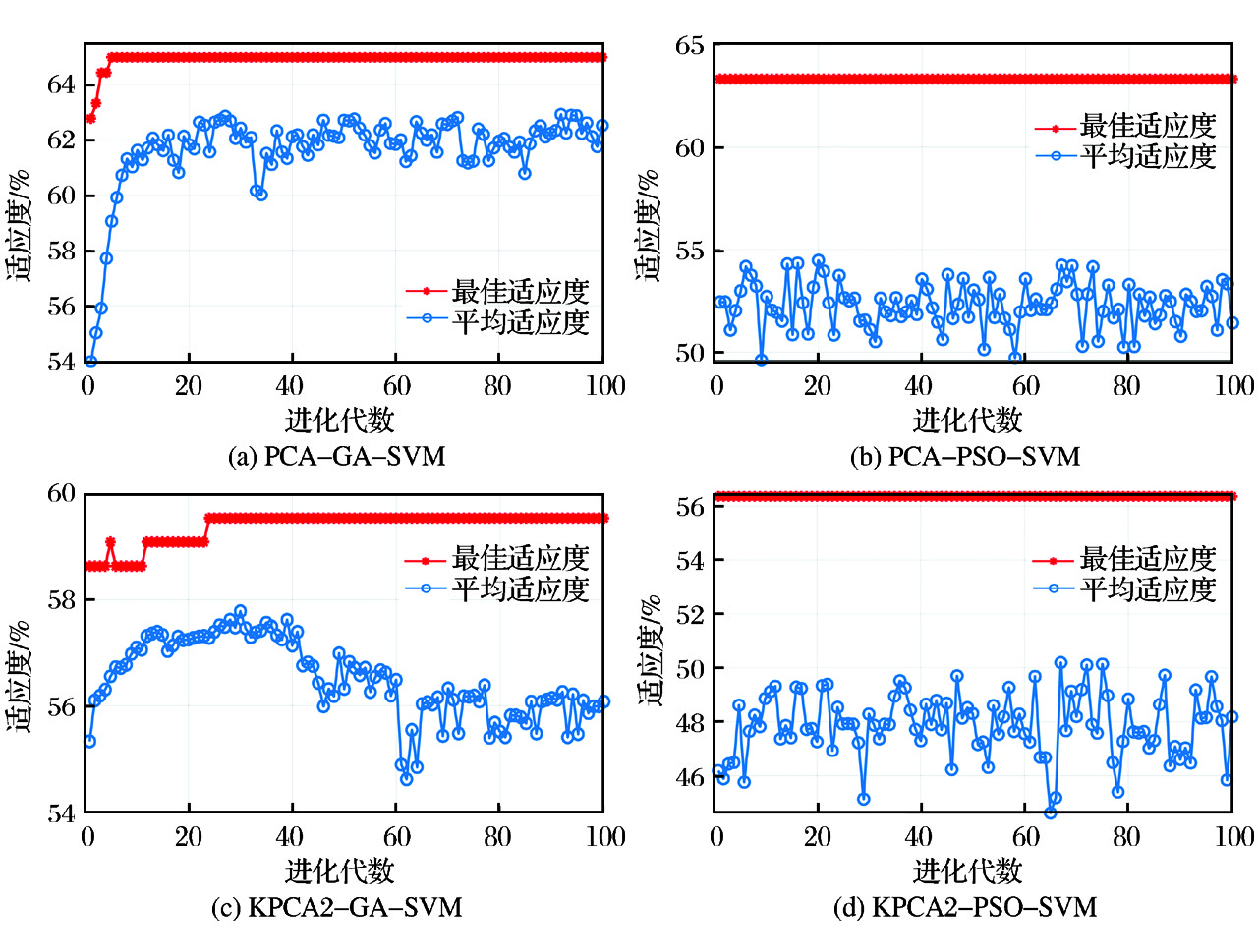
Rockburst is a relatively dangerous engineering geological disaster in underground hard rock engineering constructed in high geostress area.Due to the re-distribution of the stress in surrounding rocks during the excavation of underground engineering,the elastic strain energy is released suddenly and abruptly,causing rock fragments to eject from the rock.And then,the casualties and equipment damage are often happened,which make the rockburst become one of the worldwide difficulties in underground engineering.Therefore,the prediction of possibility of rockburst and its intensity is a problem that must be solved in underground engineering construction.For predicting rock-burst intensity effectively,a combined prediction model based on kernel principal component analysis (KPCA) of multiple types and the support vector machine (SVM) optimized by genetic algorithm or particle swarm optimization algorithm (GA/PSO) was established.According to the characteristics and causes of rockburst,rocks’ maximum tangential stress
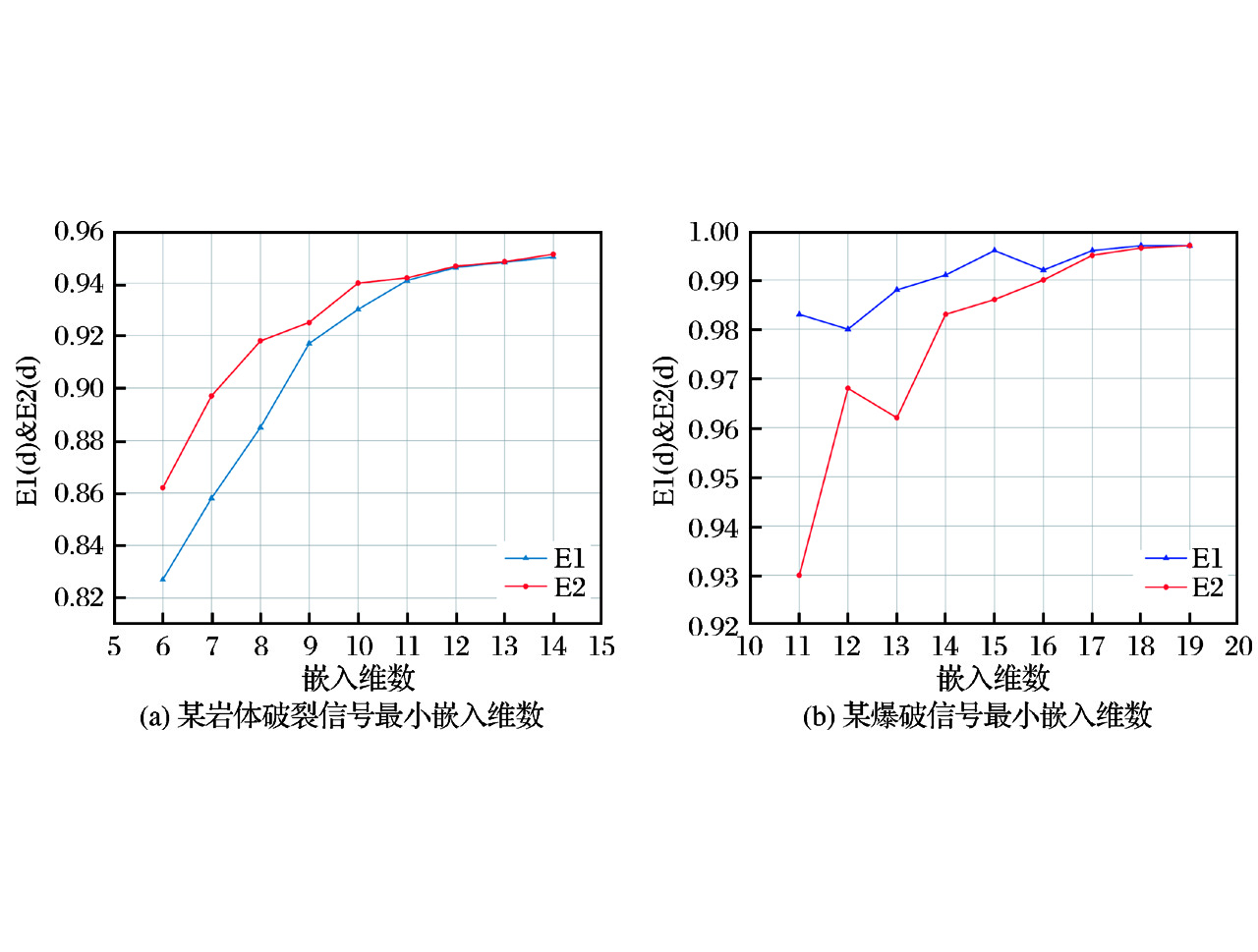
The microseismic monitoring technique is to evaluate the failure and safety of rock mass indirectly by monitoring the vibration signal caused by the rupture inside the rock mass,and it can provide guidance for ground pressure disaster warning and safety production optimization.In order to accurately analyze the behavior of rock rupture,it is necessary to eliminate the interference of non-microscopic signal.At present,microseismic monitoring system can not recognize microseismic signal automatically.The core problem is that the vibration signal is complex,the waveform characteristic is not obvious,the noise is large and multi-seismic superposition occurs.In order to solve the problem that it is difficult to distinguish the rock burst signals and the blasting vibration signals automatically,a method of feature extraction and classification of microseismic signals based on ensemble empirical mode decomposition(EEMD),correlation dimension and machine learning was pro-posed.Firstly,the microseismic signals was decomposed into Intrinsic Mode Function(IMF) components by EEMD,and the principal components IMF1~IMF4 were selected from the obtained IMF components,the IMF1~IMF4 component was selected as the main component for phase space reconstruction.The delay time and minimum embedding dimension of each component were obtained by autocorrelation function method and Cao algorithm.Then,accoring to the obtained delay time and embedding dimension,the correlation integral curve of IMF1~IMF4 components was obtained by using the G-P algorithm,and the region with the best linearity of the correlation integral curve was found.The integral curve was fitted by least squares,and the resulting linear slope value was taken as the correlation dimension value,and the obtained correlation dimension was taken as the feature vector for microseismic signal recognition..Finally,the SVM method was used to automatically identify the microseismic signals and compare them with other machine learning methods.The experimental results show that the method has a high accuracy for automatic recognition of microseismic signals.The recognition effect of SVM based on Gaussian kernel function is obviously better than the recognition result of Logical Regression(LR) and K-Nearest Neighbor(KNN) discriminant method.The classification accuracy of gaussian kernel function SVM based on EEMD correlation dimension is 93.7%.Based on the analysis,it is found that the recognition effect SVM different kernel functions is different.The recognition effect of Gaussian kernel function SVM is better than that of linear kernel function SVM and Sigmoid kernel function SVM.Therefore,the feature extraction and classification method based on EEMD correlation dimension and SVM provides a feasible new method for mine microseismic signal classification.
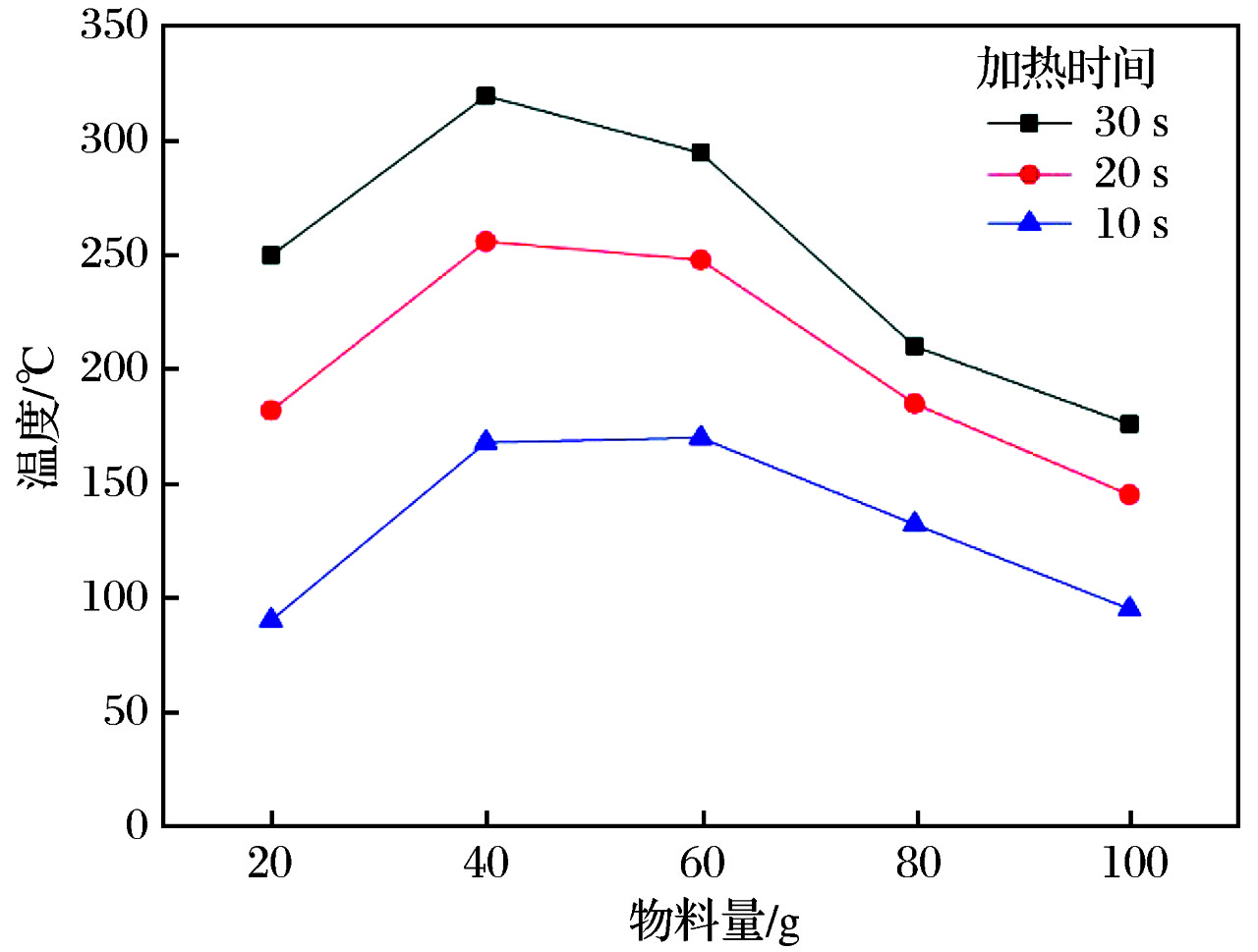
Because of its light weight,high strength,and good corrosion resistance,the development and application of titanium have attracted widespread attention from Chinese and foreign scholars.The higher the content,the lower the grade of titanium concentrate that can be recovered,and it is difficult to improve the recovery rate.In order to improve the recovery efficiency of ilmenite,the heating behavior of ilmenite under pulsed microwave conditions was studied.In this study,pulsed microwave pretreatment of ilmenite was carried out using a self-made pulsed microwave device.The effects of different irradiation time,pulse microwave power,weight of ore sample and particle size of different ore samples on the heating performance of ilmenite were studied.The composition of the ore sample was analyzed by X-ray diffractometer,and the particle size of the sample was detected by a nano-laser particle size analyzer.The research results show that the heating behavior of materials in the microwave field is determined not only by the nature of the mineral itself,but also by the power of the microwave heating equipment.The temperature increase rate of ilmenite is significantly affected by the quality of the sample.At the same time,the change law shows consistency under different heating time conditions:When the mass of ilmenite is 40~60 g,the temperature increase rate reaches the maximum.The changes in the quality of ilmenite can significantly affect the heating temperature of the ore sample.Under the condition of a certain microwave power,the longer the microwave acts on the material,the higher the temperature of the ore sample.With the change of the particle size of the material,the microwave temperature showes a trend of increasing first and then decreasing.When the ore sample has a particle size of 25 mm,a weight of 40 g,an irradiation time of 30 s,and an average microwave power of 3 kW,the sample is heated to the best effect.The research in this paper is of great significance for the application of pulsed microwave in the field of grinding aid.
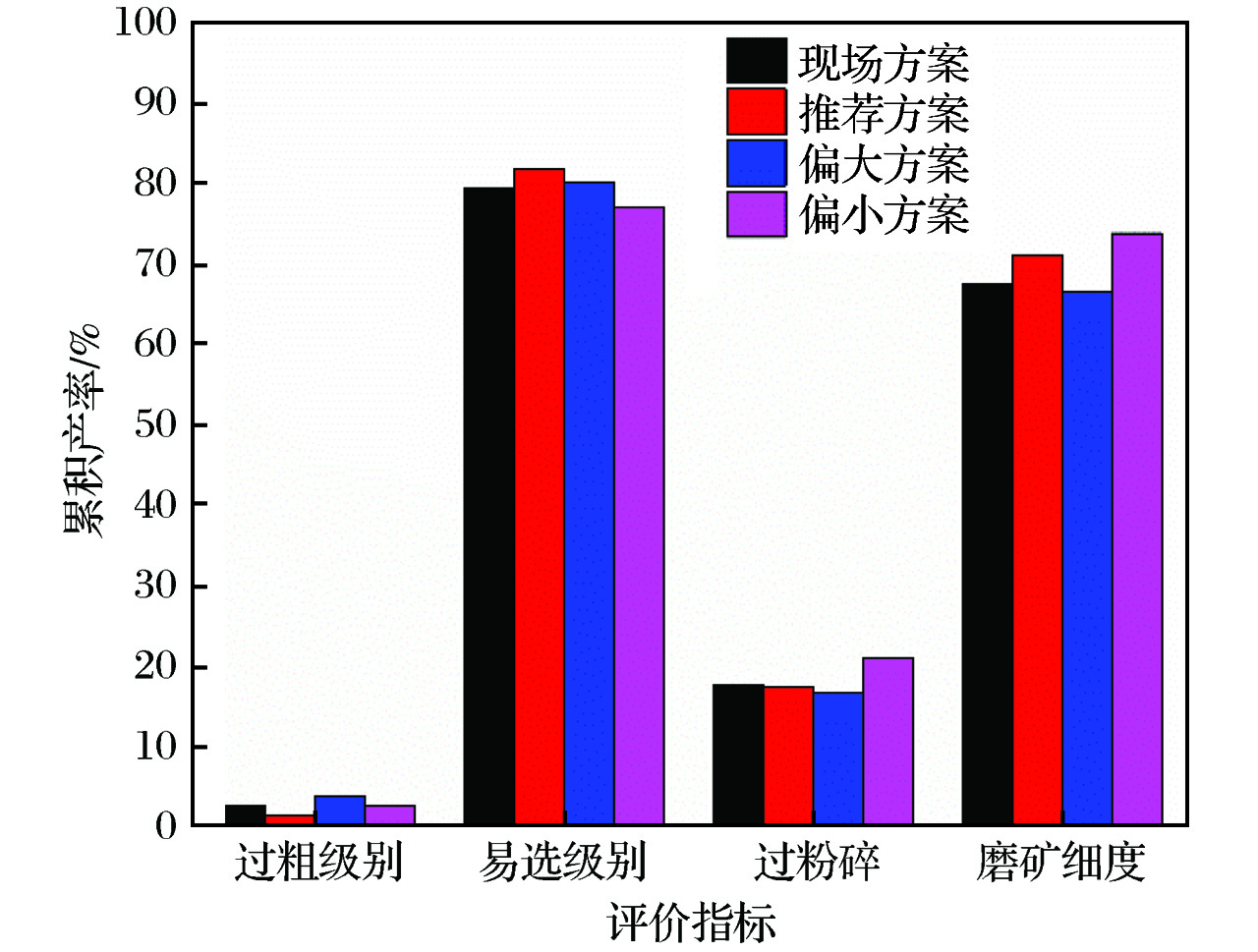
In order to improve the problems of unreasonable particle size composition,low processing capacity,low transfer rate and high energy consumption of large-scale ball mill grinding products,achieving the purpose of improving the quality of grinding products and optimizing the beneficiation index of the beneficiation plant in a copper mine in Jiangxi,in this paper,the test is performed according to the following steps.Firstly,the main mechanical properties of the ore were determined,including bulk density,elastic modulus,and Poisson’s ratio.Secondly,a laboratory grinding comparison test was carried out in a D×L=240 mm×300 mm)mill,by comparing the grinding effects of the five grinding schemes of the recommended scheme,the plant scheme,the larger scheme,the smaller scheme,and the steel section scheme,the working media system of the mill media with the best ore matching of the concentrator was finally determined as φ60∶φ50∶φ40∶φ30=30∶25∶30∶15.Summarizing the ore mechanical property test results and laboratory grinding test results,we can conclude that:The ore mechanical property test results show that the average ore bulk density is 2.78 g/cm3,the average hardness is 7.9,the average elastic modulus is 3.11×10⁴ MPa,and Poisson’s ratio with average value of 0.25.The overall properties of the ore are media hardness but high toughness.During the ore grinding process,the number of grinding times per unit time should be strengthened.The results of laboratory grinding show that the recommended scheme has a reduction of 1.21 percentage points in the coarse grade (+0.200 mm) and 0.32 percentage points in the over-comminuted grade(-0.010 mm) and the intermedia easily selectable grade(-0.200+0.010 mm) grain content increased by 2.53 percentage points compared with the current plant scheme;Recommended scheme has a better grinding effect compared with steel section scheme,although the over-comminuted grade(-0.010 mm) grain of recommended scheme is 2.75 percentage points higher,the coarse grade(+0.200 mm) grain grade content,grinding fineness(-0.074 mm) grain grade content and intermediate easily selectable grade(-0.200+0.010 mm) grain grade content have increased respectively,they increased by 4.58 percentage points,1.48 percentage points and 3.25 percentage points.Compared with data before and afterthe industrial test,the monthly processing capacity was increased by 13 242 t,the transfer rate of the mill was increased by 2.18 percentage points and the monthly power consumption was reduced by 173 kW.It shows that optimizing the grinding media system can not only improve the quality of the grinding products to a certain extent,but also have an important promotion significance for energy saving and consumption reduction,significantly improve the company’s core technical level and have reference significance for the same type of mine.
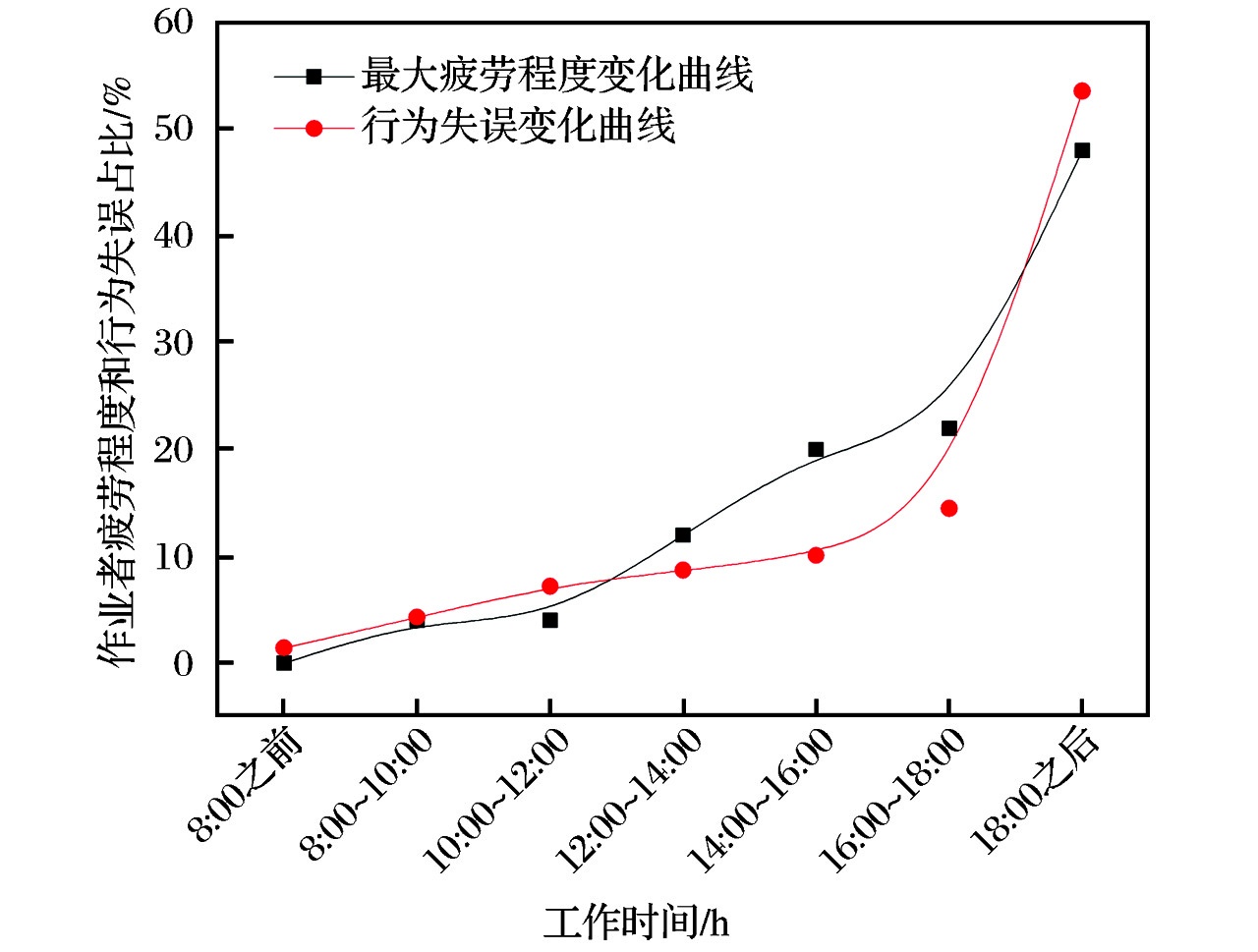
Human fatigue is one of the main factors leading to safety accidents,especially for plateau operations with “low air pressure,low oxygen partial pressure,low temperature” and other characteristics,it is more likely to cause operator fatigue,not only greatly reduces workers’work efficiency,but also easy induce human accidents,which pose a threat to the life and safety of the operator.This article aims to prevent fatigue errors caused by factors such as long working hours and heavy tasks in plateau mines,and to ensure the safe production and occupational health of workers in plateau mines under low oxygen environment.Firstly,the characteristics of human fatigue accumulation were analyzed.The human fatigue-operation error mechanism map of plateau mines was built,and the mechanism of human operating errors caused by fatigue accumulation in plateau areas was summarized.Secondly,the changes in human physiological functions and maximum work volume at different altitudes were compared.The four stages of fatigue accumulation in high-altitude operation (initial stage of fatigue accumulation,stable stage of fatigue accumulation,later stage of fatigue accumulation,irreversible stage of fatigue recovery(fatigue damage)) are divided.Based on a questionnaire survey on the relationship between fatigue and behavioral errors of plateau mine operators,the characteristic curves of the error rate at different fatigue accumulation stages in the plateau mining was drawn,which initially revealed the change trend of error rate in the initial stage,stalble stage,later stage and irreversible stage (fatigue damage) of plateau workers’fatigue accumulation.Finally,using human factors analysis and classification system (HFACS),the paper proposed the Fatigue-Human Errors Framework (F-HFACS) of plateau mines comprehensively analyzes the factors of plateau miners’ fatigue and their impact on the occurrence of human errors.This study showes that there are higher operating efficiency,lower work error rate and better working stability at the stable stage than those at other stages;The fatigue accumulation further deepened at the later stage,and the working error rate is sharply increased,and to prevent fatigue damage,the operation must be stopped.The study provides a scientific basis for the safety management personnel of plateau mines to formulate a reasonable shift plan and reduce the operational error rate.




 甘公网安备 62010202000672号