
The study of genetic mineralogy of pyrite could provide the important information for the estimation of deep mineralization potential.The deep drilling (ZK96-6,2 735.70 m) at the Sanshandao gold deposit uncovered that the mineralization could still extend to the depth (-2 613 m to -2 684 m) along the Sanshandao fault zone.Therefore,this study will focus on the genetic mineralogy of pyrite from the deep drill of Sanshandao gold deposit (-2 613 m to -2 684 m),exploring the indicators of typomorphic characteristics of deep pyrite for the deep mineralization.The detailed observation was given to the geometry typomorphic characteristics of different stages of pyrites.The contents of the major and trace elements of different stages of pyrites were analyzed by electronic probe and ICP-MS,respectively.The thermoelectrometry apparatus was operated in order to explore the thermoelectric characters of all stages of pyrites.The pyrite of quartz-gold-pyrite stage in deep gold orebody shows larger grain size than pyrite in other stages, which indicates that ore-forming fluids in this stage attained the supersaturation condition and amounts of pyrite precipitated.A lot of reduced sulfur could be fixed into pyrite,which led to the destability of Au-S complexes and gold precipitation.Selected trace elements contents of pyrite in deep gold orebody (-2 613 m to -2 684 m) were drawn in the (Au+Bi+Cu+Pb+Zn)-(As+Sb+Ba+Ag+Hg)-(Ti+Cr+Co+Ni) triangle discrimination diagram,which indicates gold orebody in this location belongs to the middle part of the whole orebody and the depth still has the gold mineralization potential.The occurrence rate of P-type pyrite and the gold grade show positive correlation,which indicates that the coprecipitation of P-type pyrite and gold.This relationship could be used as the criterion for the deep prospecting of gold and also indicate the enormous potential of gold mineralization in the depth of Sanshandao gold deposit.

Jiama deposit is located in Gangdese metallogenic belt,Tibet,with high level of study and exploration.The deposit is composed of porphyry orebody,skarn orebody,hornfel orebody and peripheral independent gold orebody,as multi-unit orebody structure.The ore-forming elements included copper,molybdenum,lead,zinc,gold and silver,with ploymetallic mineralization features.In recent years,under the guidance of the theory of porphyry mineralization system,great breakthroughs have been made in the deep and peripheral mining areas.According to the latest exploration,the total copper resources (reserves) discovered in the Jiama is over 8.5 million tons,and 910 thousand tons of molybdenum,1.5 million tons of lead and zinc,220 tons of associated gold and 10 thousand tons of associated silver have been discovered in Jiama,as a super-large or giant deposit.This paper aims to reveal the regional and peripheral prospecting directions,which are useful to do the further exploration,based on the latest exploration results.The geological structure of these orebodies in different sections of Jiama,have been systematically dissected via drilling core logging and alteration and structure mapping. At the same time,combining with newly two discoveries,a large thick skarn orebody in the main ore segment and the outlying large porphyry orebody in the North-Zegulang segment,the prospecting potential in the deep and periphery of Jiama has been analyzed synthetically. The high-grade Cu (Mo) skarn orebody and low-grade Mo porphyry orebody were most important target for the deep exploration in the main ore segment,and new porphyry,skarn and hornfel orebodies would been found during the further exploration works. They were helpful to create some effective exploration methods and provided some good suggestions for further study of ore-forming process and established a comprehensive exploration model of Jiama giant deposit. In addition,after systematic analysis of existing exploration and research data,combined with the latest exploration and research results,we summarized some prospecting indicators of Jiama deposit and provided some important clues for further exploration of similar deposits in the same region.These works will construct good foundation for exploration and research of the porphyry mineralization system in the Qinghai-Tibetan plateau.

The Zhongdian area, located in northwestern Yunnan, is an important porphyry belt in China. It hosts a large number of Triassic intermediate-felsic porphyritic intrusions and porphyry deposits such as Pulang porphyry Cu-Au, Xuejiping porphyry Cu, Chundu porphyry Cu, Langdu Cu skarn and Lannitang porphyry Cu-Au deposit. The Lannitang porphyry Cu-Au deposit is located in west belt of the Zhongdian area. The magnetite in Lannitang porphyry Cu-Au deposit is widespread and it occurred as disseminated and vein types in potassic and chlorite-sericite alteration zone.Specularite is also observed frequently in the post-mineralization dolomite-quartz coarse veins.We conducted the petrography and laser ablation inductively coupled plasma mass spectrometry (LA-ICP-MS) to determine the texture and composition of iron oxides (magnetite and specularite). In this study, we identified three types of magnetite. Type-Ⅰ magnetite is disseminated in potassic alteration of deposit. It is generally contains ilmenite lamellas. Type-Ⅱ and Type-Ⅲ magnetite are occurred in magnetite single vein and magnetite-bearing quartz stockwork vein separately. Type-Ⅱ and Type-Ⅲ are distributed in potassic and chlorite-sericite alteration zone. The LA-ICP-MS analyses show that Type-Ⅰ magnetite is relatively rich in V, Ni and Mg than other two types of magnetite. Type-Ⅱ and Type-Ⅲ magnetite are more enriched in Mn, Zn, Sn, Sc and high-Ni/Cr ratio than Type-Ⅰ magnetite.Type-Ⅱ and Type-Ⅲ magnetite has similar content of many trace elements. The concentration of Cr,Ga,Ni and Co in specularite is obviously lower than those of magnetite. The ilmenite lamellae and low-Ni/Cr(Ni/Cr<1) ratio revealed that Type-Ⅰ magnetite belongs to igneous magnetite. Type-Ⅱ and Type-Ⅲ are distributed in veinlets and displayed high-Ni/Cr ratio (Ni/Cr>1). We suggested that they are hydrothermal magnetite. Type-Ⅰ magnetite (igneous) is intergrown with hydrothermal minerals including chlorite and sericite and it has quiet similar contents of Ti, Al and Cr with the other two hydrothermal magnetite.We suggest that Type-Ⅰ magnetite (igneous) experienced late-stage fluid alteration, which induced the loss of Ti, Al and Cr.The similar content of trace element between Type-Ⅱ and Type-Ⅲ magnetite indicated that they may precipitate from same period of fluid.In combination with previous studies, we propose that the presence of elements such as Al, Mn, Mg and Sc are in solid solution within magnetite (and/or specularite),but the Ca, S, Cu, Ba, Sr and Zr may be present in micro-/nano-scale mineral inclusions.The widespread presence of magnetite-hematite and specularite in the potassic alteration zone and low Mn concentration of magnetite indicates a high oxygen fugacity of the Lannitang porphyry Cu-Au deposit (magnetite-hematite buffer).

The Kalamaili ophiolite belt is an important component of East Junggar.It extends along the Kalamaili Mountains in NWW direction, extending about 400 km.It is an important tectonic unit in the region. The opening and closing of oceanic separation represented by the ophiolite belt is of great significance to the tectonic evolution of the whole east Junggar region.Previous studies on the age of ophiolite have mainly come from the fossil age of siliceous rocks and the zircon U-Pb age of diabase, gabbro and baddeleyite granite. However,there are few reports on the age of baddeleyite in ophiolite.The Kalamaili ophiolite is mainly composed of peridotite,gabbro,plagiogranite and a small amount of siliceous rock, controlled by the Kalamaili fault, which makes gabbro appear as tectonic block and accompanied by peridotite.Gabbro belongs to the large class of silica-unsaturated rocks. Baddeleyite coexists steadily with pyroxene and olivine, while zircon belongs to silica-saturated, supersaturated minerals and gabbro. The crystallization of baddeleyitee is earlier than that of zircon, which is more representative of the true age of formation of rocks. Therefore, in this study, more than 200 baddeleyite were selected from fresh gabbro exposed in massive form in the western part of ophiolite belt, and 80 of them were selected to make targets and take transparent, reflective and cathodoluminescent photographs.Since baddeleyites are black in the cathodoluminescent photographs, LA-ICP-MS U-Pb dating was carried out at the selected testing sites of the transparent and reflective photographs, and 16 years of good harmony were obtained.Age data ranged from 431 Ma to 444 Ma. The harmonic age of rock 207Pb/235U-206Pb/238U is (434.4+2.7)Ma (MSWD=0.87) and the weighted average age of 206Pb/238U is (436.4+2.5)Ma (MSWD=0.59) calculated by ISOPLOT software. The two ages are consistent within the error range, indicating that the gabbro was formed in early Silurian.Up to now, this age is the earliest one found in the Karamari ophiolitic melange, which indicates that the Karamari oceanic basin began to stretch and form in the early Silurian.That is, the Karamari oceanic basin existed before the closure of the oceanic basin represented by the Zhaheba-Aermantai ophiolite in the north of the basin.

During the mining process by using cut and fill method in Jiaojia gold mine,the blasting compensation space is obtained by squeezing the backfill to avoid cutting holes and improve the mining efficiency. As a result,the strength and self-reliance of backfill are obviously reduced.In addition,due to the heavy production task,the stopes are usually mined while backfill be cured only two or three days.As the insufficient curing,the strength of backfill cannot reached its designed value.Therefore,large scale collapses of backfill are easily occurred during mining process,which impact the safety of operators and equipment.At the same time,the backfill mixed into the ore that results in ore dilution and higher processing cost.To resolve the problems of backfill serious damaged by blasting disturbance and unreasonable design of blasting parameters,numerical studies were carried out by use of LS-DYNA software.The influence factors of backfill damage,including the layout of blast holes and the curing age of backfill,have been analyzed. Mises yield criterion was used to determine the threshold of backfill damage by analyzing Mises effective stress distribution in backfill body. The results show that the damage area of backfill determined by comparing the dynamic tensile strength of backfill with the effective peak stress is feasible. The backfill damage area is closely related with the position of blast holes,and show a negative linear relationship between them,i.e.,the closer of the blast holes to the backfill,the greater damage of the backfill. When the distances between blast hole and backfill increased from 0.2 m to 0.8 m,the damage area of backfill decreased from 1.48 m2 to 0.74 m2. Based on the blasting theory,the process of fracture zone induced by blasting can be divided into two phases. First,the shock wave energy would cause cracks generated around the hole. Then,the quasi-static pressure from the gaseous explosive energy result in the propagation of cracks. The reasonable distance between blast hole and backfill obtained from blasting theory is consistent with the result obtained by numerical simulation. The curing age is deeply influence the backfill damage characteristics. With the curing age prolongs,the damage range of the backfill gradually decreases. Seven days is an important time to influence the strength of backfill. When the curing age of backfill is more than 7 days,the damage zone of backfill remarkably decrease,and vice versa.Take the distance of blast hole is 0.5 m from backfill as an example,backfill damage areas decreased from 2.94 m2 to 0.93 m2 with its curing age prolonged from 3 days to 28 days. According to the above research results,the blast holes arranged from 0.3 m to 0.6 m to backfill and the backfill cured at least 7 days are recommended.

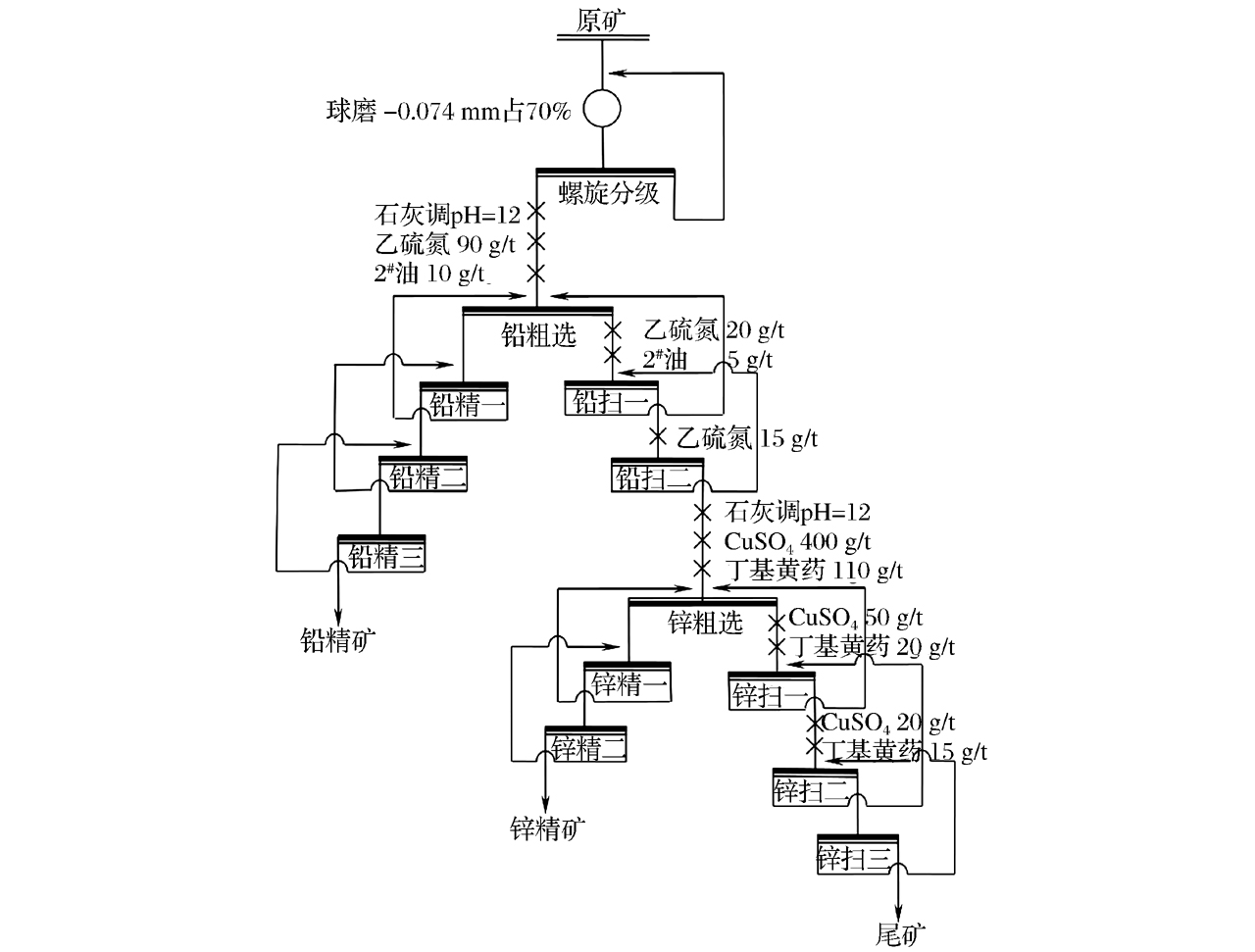
The lead and zinc mineral resources are very abundance in China,but the lead-zinc metal quantity is much short for further mining.The resources are not of natural endowment,with difficulty of utilization.Type of lead-zinc deposit is variety and associated elements are rich.Sulfide minerals have similar interface properties and are difficult to separate.Widespread as the occurrence of resource is,the ores are mostly very low-grade,complexity of multi-components and difficult of separation.All of this up make it difficult to recover such resources efficiently and comprehensively.It is necessary to carry out systematic process optimization and technical research in order to improve the comprehensive utilization.The Luoba lead-zinc deposit in Gansu Province is a mudstone-fine clastic lead-zinc deposit,associated with a small amount of silver and sulfur.With the long-term exploitation and utilization,the valuable metal content of lead and zinc in the ore decreases,while the content of carbonaceous and siliceous minerals increases,which brings great interference to the separation and recovery of lead and zinc.There are some problems in lead and zinc concentrate production,such as lead concentrate grade decrease,zinc concentrate containing excessive silicon.As a result,the present mineral processing technology and reagent system can’t adapt to the change of ore properties well.Therefore,a systematic process optimization and technical research should be carried out to find out the quality decline of concentrate and the possible problems in the process of concentration,and to explore the difficulties and physical factors in the recovery of lead and zinc flotation,so as to improve the comprehensive utilization level of resources.On the basis of detailed understanding of mineral processing technology and production status,an overall processing flowsheet investigation was conducted.It has been studied that the technical parameters and production conditions of each operation of grinding and floating process.Then the distribution of useful and harmful elements was identified.The problems existing in the production process were analyzed,the physical factors concerning the grade and quality of lead and zinc concentrate were proved.Then put forward a specific improvement program in order to optimize the existing process and technical conditions,and to provide a high efficiency foundation for carbolic lead-zinc resources recovery.The results show that the carbonaceous minerals,such as aphanitic graphite,are of high content in the ore.It is easy to be mud in the grinding process,and has good floatability and adsorption performance.Because of the interaction between the carbonaceous minerals and lead-zinc minerals,the adsorbing quantity of collectors for the lead-zinc minerals in slurry system was less than that of collectors without carbonaceous minerals.The carbonaceous minerals,such as aphanitic graphite,finally entered the concentrates,affecting the recovery and quality of lead and zinc minerals.High-alkali speed flotation technology,has solved the concentration recovery of lead and zinc mineral.But the content of silicon and carbon in lead and zinc concentrates is high. So,it needs to search some appropriate inhibitors in the separation process,to strengthening inhibition of zinc-sulfide minerals.At the same time,it is necessary to appropriately optimize the parameters of grinding process,to reduce the degree of argillation of the carbonaceous and siliceous gangue minerals.In order to improve the grade and quality of lead and zinc concentrate,it is necessary to find suitable collectors and reduce the viscosity of flotation foam.Through put forward a specific improvement program in order to optimize the existing process and technical conditions,and to provide a high efficiency foundation for carbolic lead-zinc resources recovery.
For many years,the open stope method,caving method and tailings cement filling method are mainly used to mine the steeply inclined medium-thick ore body from open pit to underground.For some special areas,tailings cannot be used for filling.In order to improve the recovery efficiency,it is necessary to study the mining methods in combination with the geological conditions.In view of the steeply inclined and medium thick orebody from open-pit to underground mining in the north section of Qinglonggou mining area,the continuous dry filling of long room method was put forward.The method is on the basis of sublevel drilling and ore dropping by bench open stoping method,and according to the engineering geological conditions of the ore body and its stability,combined with the existing mining equipment and filling conditions of the mine.This method mainly use the subsection development,the subsection mining cutting,the pre-control roof,the medium-deep hole continuous blasting backward mining,the scraper continuous mining and continuous dry filling goaf. Stage is divided according to the orebody shape,and the drilling tunnels is excavated at the bottom layer in the first mining stage,and the previous layer pre-control roof provides drilling tunnels for the next layer mining.Arrange the cutting slot at the end of the mine and mining from one the side of the mine to the other side.Firstly,drill parallel holes upward in the cutting roadway.The row spacing of blasting holes is 1.2~1.5 m,and the spacing of parallel blasting holes is 1.2 m.After the blasthole is completed,cutting raise with free surface blasting can form cutting slot.The amount of ore from the cutting slot should ensure sufficient compensation space for the ore blasting in the stope.Medium-deep hole continuous ore break down is adopted.The stope is mining retracted from one side to the other.After the backfilling space is formed,the waste rock is poured into the stope through the filling roadway to a sufficient height to form the initial waste rock heap.The truck in the pit discharges waste rock on the waste rock heap.In principle,the stope is ventilated by the main air flow of the mine.The fresh air enters the stope along the drift from the sectional transport roadway through the perforation roadway.The waste-air passes through the upper part along the vein filling roadway,return to the upper part,and is collected and discharged to the return air well.The goaf is filled with waste rock while the medium-deep hole continuous ore dropping.This mining method simplifies the design of ore block exploitation,greatly reduces the amount of mining and cutting,and shortens the time of mining and cutting.Continuous mining is adopted to reduce pillar setting and increase ore recovery,and dry filling body is used to controlling mining site pressure.The field test in the north section of Qinglonggou mining area shows that the high-intensity and large-scale concentrated mining can be realized by adopting the continuous dry filling mining method for the steeply inclined medium-thick orebody,which improves the recovery rate of the ore block and reduces the loss of mineral resources.

The basic characteristics of the occurrence of metal mineral resources in China are as follows: There are few large deposits,many medium and small deposits;There are few single metal ores,many associated and multi-metal ores. Besides,it also includes extensive management and low intensification.With the increase of mining intensity,the easy-to-exploit resources are gradually exhausted,and some resources such as difficult mining,hidden dangers,and complex engineering objectives have gradually received attention.At present,it is necessary to adopt some new mining concepts,new propositions,new theories,new technologies and new methods to guide the exploitation of this complex and difficult resources.In 2008,the author draws the concept of synergy into the technical difficult problems of mining hidden resources in the mined-out areas,and creatively proposed a new technology model for mining development in which the hidden danger resource exploitation and the empty area treatment are coordinated.Since then,the prelude of “synergetic mining” research has been opened in China’s mining engineering academic circles.With the in-depth development of the concept of “synergetic mining”,synergetic mining has become a hot research topic for mining industry professionals.Chinese scholars have proposed or invented a number of typical schemes for synergetic mining methods.As mining methods under the concept of synergetic mining,the synergetic mining method has advantages in mining complex underground difficult resources.The invention and creation of the synergetic mining method not only has the inventor’s conscious or unconscious innovative mindsets guidance,but also requires certain skills and methods,that is,“innovative techniques”.So far,few scholars have systematically summarized and analyzed the innovative mindsets and innovative techniques of this type of mining method.Based on this,three kinds of innovative mindsets and corresponding innovative techniques,which are commonly used in engineering,were summarized.And the innovative mindsets and innovative techniques of the 19 synergetic mining methods invented by Chinese researchers since 2009 to 2018 were reviewed and analyzed.The weighted average of innovative mindsets and innovative techniques is calculated,and the enlightenment of the calculation results was discussed.The analysis shows that the combinational innovative mindsets and its corresponding innovative techniques dominate the innovation activities of synergetic mining methods,accounting for 90.48% of the entire innovation system,and can continue to play the mainstream guiding role in a certain period of time.There are few applications of transplant innovative mindsets and reverse innovative mindsets in the innovation of synergetic mining methods,which only account for 4.76% of the entire innovation system respectively.Their corresponding Direct Analogy Technique and Reverse Thinking Technique,and other innovative techniques may also be used to create synergetic mining methods in the future.In the future synergetic mining method innovation activities,it can be realized through the following four ways:The development of mature traditional mining methods as the main body,and the addition of some new structures and new technologies to the stope structure or mining process of traditional mining methods; Functions,structures,methods,etc. are combined with foreign objects; The same functions,structures,methods,etc. are superimposed in quantity; Through in-depth analysis of traditional mining methods,their structures are deconstructed and reorganized.The research results are of positive reference for promoting the invention of the future synergetic mining method.The following four ways are proposed for reference: The development of mature traditional mining methods as the main body,the addition of some new structures and new technologies to the stope structure or the mining process,which are two big aspects of traditional mining methods; The different functions,structures,methods and the like of different objects are combined; the same functions,structures,methods and the like of same objects are superimposed in quantity; And the structure is deconstructed and reorganized by in-depth analysis of the traditional mining method.
The main orebody of the mining area of Songxian Shanjin Mining Co. Ltd. is located in the M1 structural alteration zone and it is strictly controlled by the structural fracture zone.Its occurrence is basically consistent with the M1 structural alteration zone,which is a moderately stable orebody and due to the roof.The rock mass is broken,and the mining area is mainly developed by the upward approach filling method,so the high-grade top and bottom pillars are left behind.In order to ensure the stability of the stope,the top and bottom columns between the middle sections are effectively recovered,and the utilization rate of the orebody is improved.The mine design shall be constructed with artificial false bottoms after the end of the mining in the middle section,and the top and bottom pillars shall be recovered under the artificial false bottom.In order to ensure the recovery stability and ore recovery rate of the bottom and bottom columns under artificial false bottom,a manual false bottom plate mechanical model was established for the artificial false bottom approach,and the instability mechanism was analyzed by the theory of elastic mechanics.When the two sides of the column are filled with the filling body,the artificial false bottom of the roadway is known as the “soft-supported weak plate” structure,and it is easy to cause bending and tensile failure in the middle of the road top plate;and the safety factor is adopted in the case where the artificial false bottom thickness is determined.The method analyzes the influence of the width and height of the approach on the stability of the approach,and determines the safe and reasonable approach width of 3.5~4.0 m and the height of 3.0~4.0 m.According to the strength requirements and the results of the strength test of the mine backfill,the filling is carried out.The calculation of the reinforcement calculation at the bottom of the body is carried out by using a 1∶8 C-material cemented backing body,and the Φ12 mm steel bar with a mesh size of 300 mm×300 mm can increase the tensile strength of the artificial false bottom.The reinforcement design is carried out at the bottom,and the numerical simulation analysis of the false bottom displacement and the stress field change of the metal mesh at different positions in the artificial false bottom is carried out,and the safest and most reasonable laying position is the middle of the artificial false bottom.The findings applied to engineering practice,the results showed that the application of artificial false bottom of the top-pillar mines safe and effective mining.

With the expanding scale of mining exploration and mining,and the increasingly serious environmental problems associated with mining,abandoned tailings and mined-out areas have become major hazards in mine safety construction.The traditional low concentration tailings surface accumulation treatment will not only cause land pollution,but also be eroded by rainwater,aggravate the cracking of tailings reservoir,and there are hidden dangers of dam break.Paste filling technology is a green tailings disposal technology,which can not only save land resources,but also protect the ecological environment by disposing of abandoned tailings.The research results show that the strength of tailings filling body is positively correlated with slurry concentration in a certain range.Therefore,by increasing the concentration of tailings filling slurry,the amount of cement can be greatly reduced,and the cost of tailings disposal can be reduced.The key links of paste filling technology of unclassified-tailings are concentrated dehydration of fine tailings and paste preparation.Distribution characteristics of diversion channel in dense bed and micro-seepage mechanism in channel are key factors affecting gravity concentration effect of unclassified-tailings.The raw material of the unclassified-tailings comes from vanadium iron ore flotation tailings.The flocculation settling and shearing experiments of the unclassified-tailings were carried out on a self-developed intelligent small continuous densification test platform.The effect of shearing on the pore distribution characteristics of the bed was studied by combining the continuous densification test with CT scanning technology.The rotation of the scraper at the bottom of the thickener breaks the static balance between particles and water,connects the pore and discharges the closed water to form a high concentration underflow. Samples were obtained by in-situ sampling-quick freezing-freeze drying process for CT scanning test.The image results obtained by CT scanning were segmented,denoised and binary processed by ImageJ image processing software.Then the results were imported into COMSOL Multiphysics software to simulate the law of reverse seepage of liquid in the bed.Finally,the influence of shear on drainage process was revealed by analysis. The results show that when the feed concentration is 10% and the flocculant concentration is 0.01%,the average concentration is 50.10% wt and 55.82% wt respectively under the continuous dense condition without/with shearing,and the internal porosity is 49.90% and 44.18% respectively,indicating that shearing can increase the average concentration while reducing the internal porosity.The number of diversion channels under non-shearing and shearing is 6 and 2 respectively.The shearing reduces the number of diversion channels by 66.7%,the number of outflow channels by 6 and 1 respectively,and the number of outflow channels by 83.3%.The maximum seepage velocity of the liquid in the channel is 9.574×10⁻⁶ m/s and 2.592×10⁻⁶ m/s respectively,and the maximum flow velocity at the outlet is 5.372×10⁻⁶ m/s and 1.468×10⁻⁶ m/s respectively.The maximum pressure on the pore surface decreases gradually with the reverse seepage of the liquid.Before shearing,the channel is open and connected.After shearing drainage,the pore volume decreases,the channel closes,and the bed concentration increases further.Adding shear action can increase the concentration of tailings and decrease the porosity of tailings,which has a great impact on the channel.The enhanced drainage mechanism under the shear condition studied in this paper will provide theoretical support for the dense dewatering of tailings mortar and lay a foundation for the preparation of high-concentration tailings mortar.

The filling mining method is mainstream mining method used in major mines today.The safe implementation of filling technology depends on the construction of a good filling pipeline transportation system.Considering the complexity of the filled pipeline system and the large number and variety of influencing factors,in order to accurately predict the wear risk of the filling pipeline of the mine,a wear risk assessment of the filling pipeline based on the improved PCA and the ordered multi-class Logistic regression combination model was built.On the basis of practical experience,a total of 12 items including the volume fraction of the filling slurry,the filling doubled line,the corrosiveness of the filling slurry,and the material of the pipe were selected.Reasonable risk levels were divided according to the characteristics of each indicator and the corresponding evaluation model was constructed.The filling production data of four mines such as Jinchuan Longshou mine and Dahongshan copper mine were taken as samples.The improved PCA algorithm was used to analyze the correlation of each index,and the three principal components with a cumulative contribution rate of 91.125% and factor load of the principal component of each indicator were obtained.In the end,the two indicators with low correlation and small influence index,the density of the filling slurry(27.75) and the corrosiveness of the filling slurry(27.60) were deleted.The preferred main indicators were substituted into the ordered multi-class Logistic regression model,the continuous indicator values were linearly fitted to the discrete risk levels,and the regression coefficients,standard errors and significance levels of each index were calculated,and the equations of probability fluctuations were solved. Finally,the probability of four mines corresponding to different wear risks Ⅰ(not easy to wear),Ⅱ(relatively easy to wear),Ⅲ(easy to wear),Ⅳ(very easy to wear) were obtained. They were: Jinchuan Longshou mine is 0.247,0.440,0.154,0.153; Dahongshan copper mine is 0.179,0.240,0.323,0.258; Hedong gold mine is 0.181,0.227,0.345,0.247; Xincheng gold mine is 0.181,0.227,0.345,0.247.From a theoretical point of view,the risk level corresponding to the probability of the largest value was used as the final judgment level of the wear risk of the mine filling pipeline,and Jinchuan Longshou mine is Ⅱ,Dahongshan copper mine is Ⅲ,Hedong gold mine is Ⅲ,Xincheng gold mine is Ⅲ. The mine also makes corresponding level protection and maintenance measures based on this.From the actual production application,it is said that the probability of the Ⅳ risk level should be paid special attention,and the normal operation of the filling pipeline should be guaranteed to the greatest extent within the scope permitted by technology and funds. The mathematical method combining improved PCA and ordered multi-class Logistic regression avoids the collinearity between the various indicators,reduces the interference of the weak indicators on the evaluation results,and obtains the accurate risk of wear risk of filling the pipeline.It provides a theoretical basis for scientific prediction of pipeline wear risk and the implementation of effective and economical protection measures for similar mines.The mine can construct an appropriate filling pipeline protection system according to its own development.
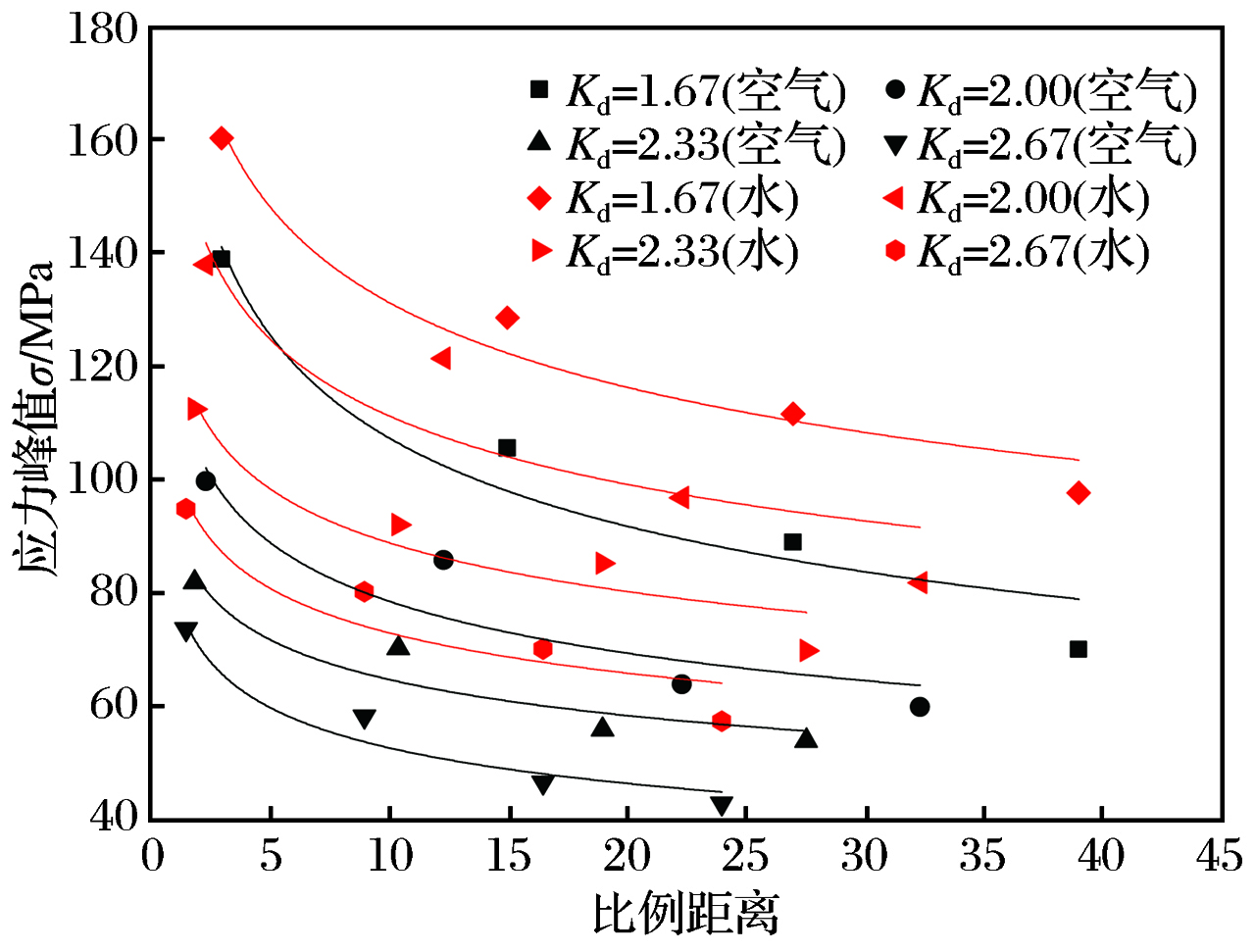
The drilling and blasting method of the downhill roadway in China is mostly shallow hole blasting.So during the process of drilling and blasting in the downhill roadway of the coal mine,the utilization of the blasthole is low,the cycle footage is small,the meteorite accumulation after the explosion is head-on,the bottoming phenomenon is serious,and the forming quality of the surrounding part of the roadway is low,greatly affecting the tunneling speed.In order to improve the energy utilization rate and blasting rock breaking effect of the permitted explosives in the third-class coal mine,and to ensure the working efficiency of the mining area,the uncoupling charge structure was optimized,and the air uncoupling and water uncoupling were respectively obtained from the theoretical derivation.The uncoupling charge structure was optimized,and the effects of air uncoupling and water uncoupling charge coefficient on the quasi-static pressure of the explosive gas were obtained by theoretical derivation,and comparative analysis was carried out.Through the laboratory blasting model test,the propagation characteristics of the explosion stress wave under the action of water and air radial uncoupling were studied respectively.The relationship between the peak stress and the proportional distance and the uncoupling coefficient of the measuring point was analyzed,which is verified by theoretical analysis.The results show that the peak value of the explosion stress wave of the water uncoupled charge at the blasthole is higher than that of the air uncoupled charge when the uncoupling coefficient is the same.As the uncoupling coefficient increases,the peak stress of the explosion stress wave at the blasthole decreases.The peak stress of the water uncoupled charge of the same measuring point is 1.15~1.52 times of the peak stress of the air uncoupled charge.The peak stress action time of the water uncoupled charge is longer than the air uncoupled charge.The obtained stress wave and its peak stress are attenuated by the negative power function with the increase of the uncoupling coefficient,and the attenuation of the air uncoupled charge is faster,which is consistent with the theoretical analysis.The water uncoupled charge structure was used for the blasting of the underground tunnel of the coal mine,and achieved a good blasting effect. In the downhill roadway of a coal mine in Guizhou,the conventional air uncoupled charging structure grooving was carried out on the trapezoidal tunneling section.,and the effect was not satisfactory.The water uncoupled charge blasting technology was used to improve the utilization of the blasthole and reduce the rock fragmentation degree,the explosion of the pile,significantly improve the rock crushing effect and slagging efficiency.
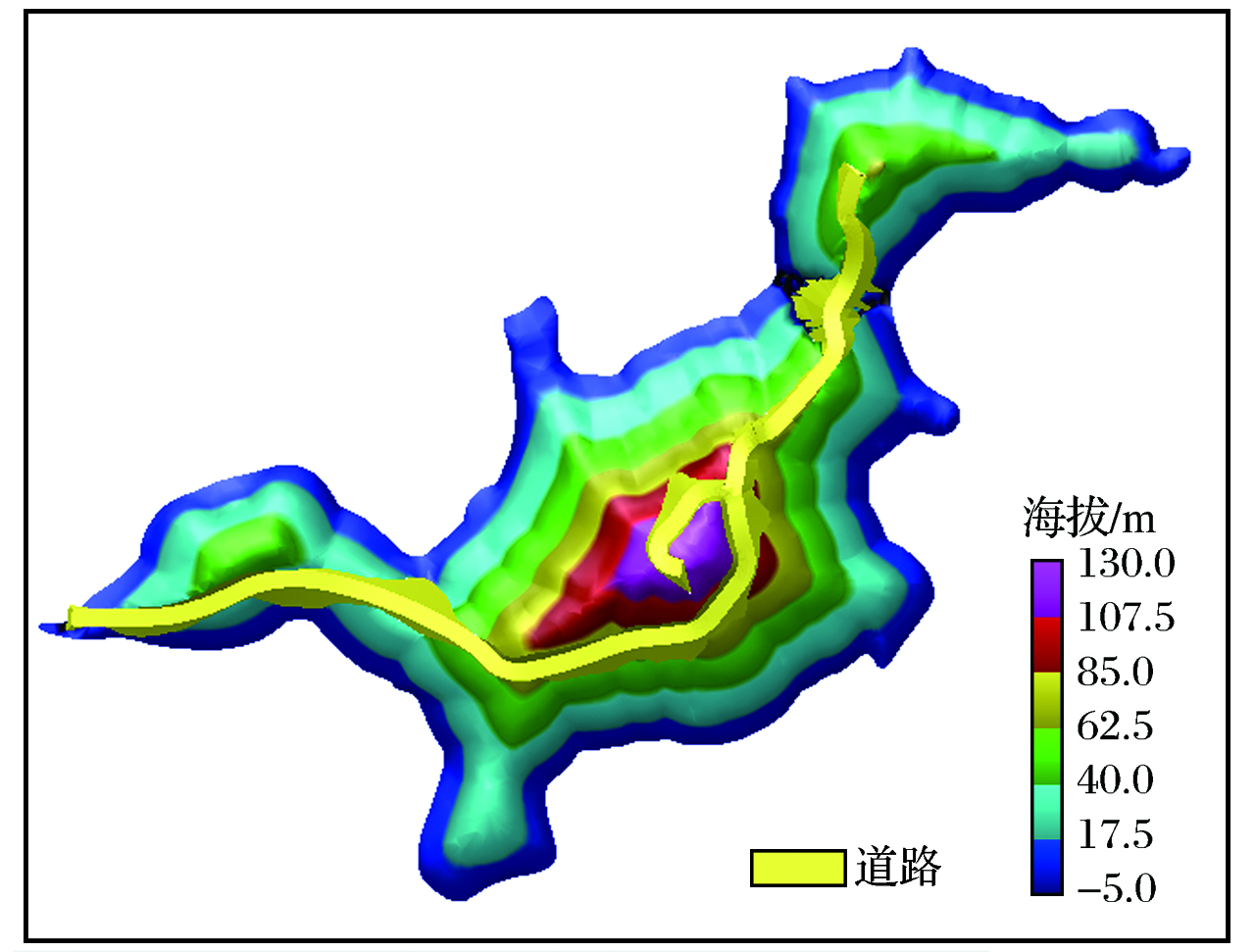
In order to ensure the balance of stone supply and efficient safety production of multi-size stone high-strength mining mines,the three-dimensional digital mining software was used to carry out the planning,design and construction supervision of the mining development system.Based on the large-scale high-strength mining project of Yushan Island,Zhoushan Green Petrochemical Base,3Dmine software was used to establish a three-dimensional digital surface model of the mining area.The optimization design of the transportation road and the calculation of the amount of engineering were carried out,finally animation simulation was used.The car-road synergy effect of the open-pit mining development system was analyzed to ensure that the construction strength requirements were met.Practice has shown that the generated development system has good visibility,which contributed to rational layout of the stope and the scientific allocation of stone materials,laying a technical foundation for the high-strength mining of multi-size stones.It is convenient to build a digital model of the mine and to a large extent realize the virtualization operation.Three-dimensional mining software is applied in the whole life cycle of open-pit mines to carry out mining design,road construction design,blasting design,engineering quantity settlement,production plan formulation and other work,which reduces the labor intensity of personnel,improves the work efficiency,and improves the level of construction refinement.Three-dimensional mining software can solve the problems of traditional open pit mining design software (such as CAD software,et al.) such as complicated operation,poor visibility and difficulty in effectively communicating the construction intention,and improve the practical production guiding significance of design.Using 3Dmine digital mining software to design a three-dimensional development system for high-strength mining of multi-specification stones and apply it to site construction is helpful to ensure the balance of supply and demand of multi-specification stones and the sustainable and efficient production management of mines.
As an effective remediation method for heavy metal pollution of soil,solidification remediation technology has become more mature and been widely used due to its low investment,quick response,simple operation and other advantages.Xiangtan manganese mine had rich manganese reserves and greatly promoted the economic development of Xiangtan area.However,the exploitation of mineral resources and the disorder accumulation of manganese residues result in the environmental problems of soil heavy metal pollution in Xiangtan manganese mine area.In order to explore the solidification remediation effect of solidification remediation technology on heavy metals in soil of Xiangtan manganese mine area,in the experiment,quicklime(CaO) and hydroxyapatite(HAP) were selected as curing agents to study the curing effect of their single and combined treatments on manganese(Mn),lead(Pb) and chromium(Cr) in the soil of Xiangtan manganese mine area.The specific research process is as follows:First of all,the soil samples were taken from the surrounding land of Xiangtan manganese mine(27°78′N,112°47′E),the soil at the depth of 0~20 cm was collected from five different sites and mixed evenly,and then brought back to the laboratory,the relevant parameters of the soil and the contents of Mn,Pb and Cr in the soil were determined.Secondly,0.10 mol/L hydrochloric acid reagent was used to extract effective Mn,Pb and Cr from soil,and the content was determined.Thirdly,the effect of curing treatments on the content of available Mn,Pb and Cr in soil was explored through variance analysis and correlation analysis.The results manifested that the content of available Mn and Pb in soil could be decreased significantly(p<0.01) by all curing treatments.The single curing treatments of CaO could reduce the content of available Cr in soil significantly(p<0.01),and there was a significantly(p<0.01) negative correlation between the dosage of CaO and the content of available Mn in soil,the application dosage of HAP had a significantly(p<0.01) negative correlation with the content of effective Mn and Pb in soil.The results show that the single and combined treatments of the two reagents have a good curing effect on available Mn and Pb in the soil of Xiangtan manganese mine area,and the single treatments of CaO generated good curing effect on available Cr in the soil of Xiangtan manganese mine area.

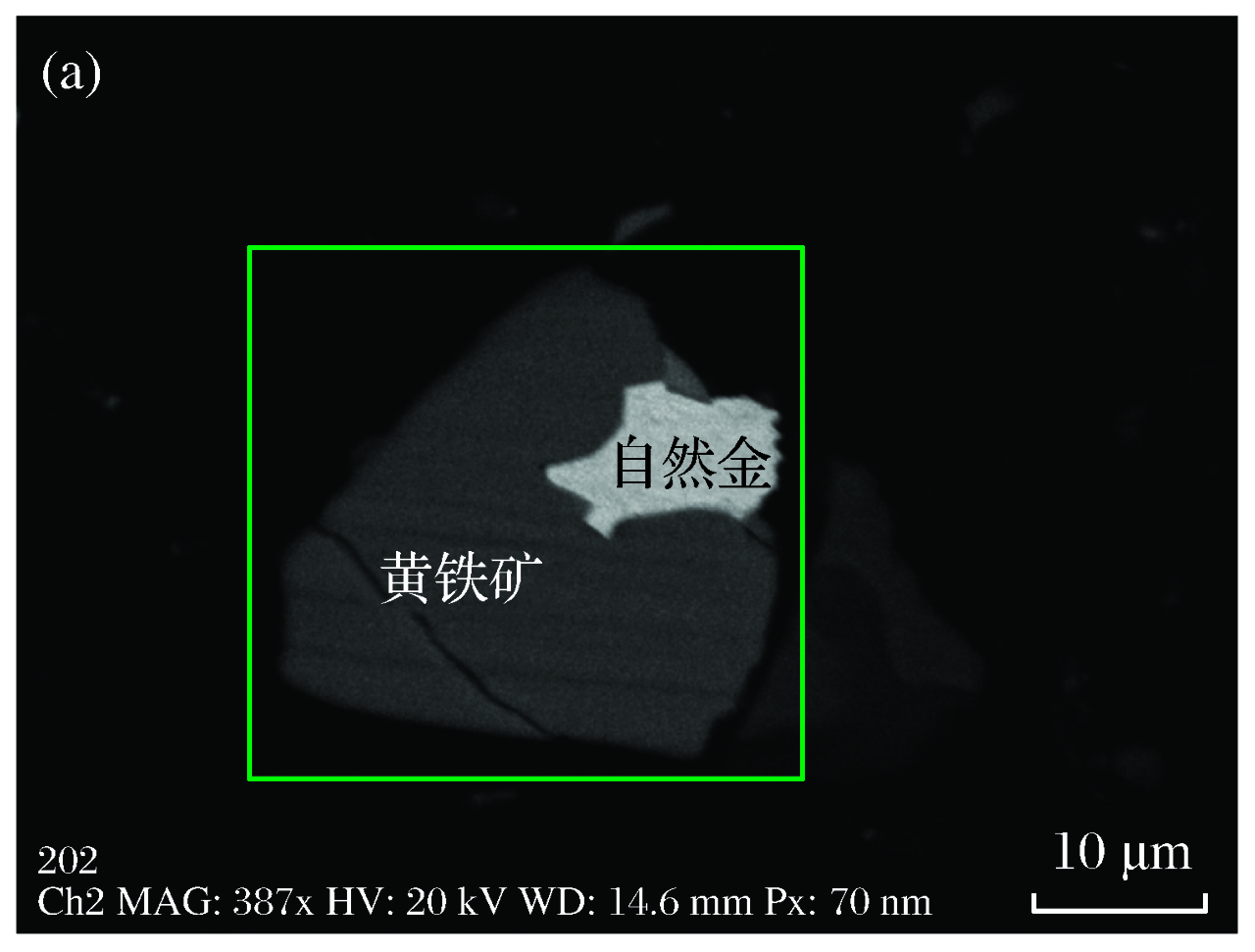
The gold grade of a gold-bearing primary ore is 5.36×10⁻⁶.Through analysis,it is known that gold is the main recovery target.Because the process mineralogy information such as the type and content of gold-bearing minerals in the primary ore and the embedded state of target elements are not fully grasped, it is impossible to optimize and adjust the production process accurately and effectively.In order to deeply explore the distribution characteristics of target minerals in the primary ore and further find out the process mineralogical factors affecting the processing and metallurgical indexes,the process mineralogical characteristics of the ore was fully studied, such as the types and contents of gold-bearing minerals, the occurrence state and distribution characteristics of target minerals and elements.Based on the scanning electron microscopy (obtaining the backscatter electron image of minerals),an automatic mineral analyzer consisting of X-ray energy spectrometer (acquiring chemical composition information of minerals) and BPMA analysis software (combining image and composition information of minerals with data in mineral database,and statistic process mineralogical parameters of minerals in samples) was developed by Beijing Institute of Mining and Metallurgical Research.The system consists of eight modules as followed:measurement module,building small reservoir module,mineral matching module,mineral processing module,Block template supplement module,process mineralogy parameter calculation module,database editing module and auxiliary function module.The mineral composition,mineral distribution characteristics,occurrence state of gold,particle size of gold-bearing minerals and dissociation degree of gold-bearing minerals were systematically studied,and the relevant process mineralogy parameters of target minerals were obtained.The results show that the main gold minerals in the primary ore are natural gold and silver goldmine,as well as pyrite,magnetite,arsenopyrite,pyrrhotite and other metal minerals.The gangue minerals are mainly calcite,quartz,mica,dolomite and a small or trace amount of apatite, kaolinite and talc.The particle size of gold in the ore is mainly fine gold and fine gold,accounting for 49.43% and 50.57% respectively.The main embedding state of gold minerals is bare gold, accounting for 72.71% and encapsulated gold for 27.29%.The results show that increasing grinding fineness and exposing wrapped gold are helpful to improve gold recovery.At the same time, before leaching, some measures are adopted to oxidize arsenopyrite to remove its adverse effects in gold leaching process.
The high alkaline copper-bearing gold ore usually have the following three characteristics:(1) The alkaline gangue has a high content,and often contains a large amount of carbonate minerals,such as calcite and dolomite.(2) The copper content is relatively high,and the copper content in the ore is usually above 1.0%.(3) The high alkaline copper-bearing gold ore is often mixed with both sulfide and oxidized minerals,as well as arsenic and other toxic and harmful elements.It is difficult to obtain the ideal separation index by conventional mineral processing methods. However,with the gradual decreasement of easily-recover gold ores,more and more attention has been paid to the study on the metallurgical technology of refractory gold ores.The technological process,Roasting of raw ore to remove carbon and arsenic-Rapid leached by ammonium chloride of calcium-Ammonium sulfate leaching of magnesium and copper-Non-cyanide leaching (swust-1) of gold,was used to recover valuable elements from ore,and to increase recovery rate of “three high” gold mine,the gold ores characterize high-carbonate,high-arsenic and high-copper.The result shows that leaching rate of calcium,magnesium and copper reached 82.88%,20.12% and 16.75%,recpectively,when calcination temperature is 950 ℃,calcination time is 2 h,pulp density is 30%,-0.074 mm grain size content is 70%,ammonium chloride concentration is 3.0 mol/L,and leaching time is 10 min. After “two-stage” leaching,the leaching rate of magnesium and copper ion is more higher than unroasted ore,under the condition of ammonium sulfate concentration of 2.5 mol/L,pulp concentration of 30%,and leaching temperature of 50 ℃. After “roasting-leaching of calcium,magnesium and copper”,the leaching rate of gold was also greatly improved.Through the above process,the total leaching rates of calcium,magnesium,copper and gold can reach 96.18%,95.16%,80.51% and 78.86%,respectively,which improve the leaching rate and comprehensive economic value of valuable elements in high-alkaline copper-bearing gold deposits,and has the potential of popularization and application.

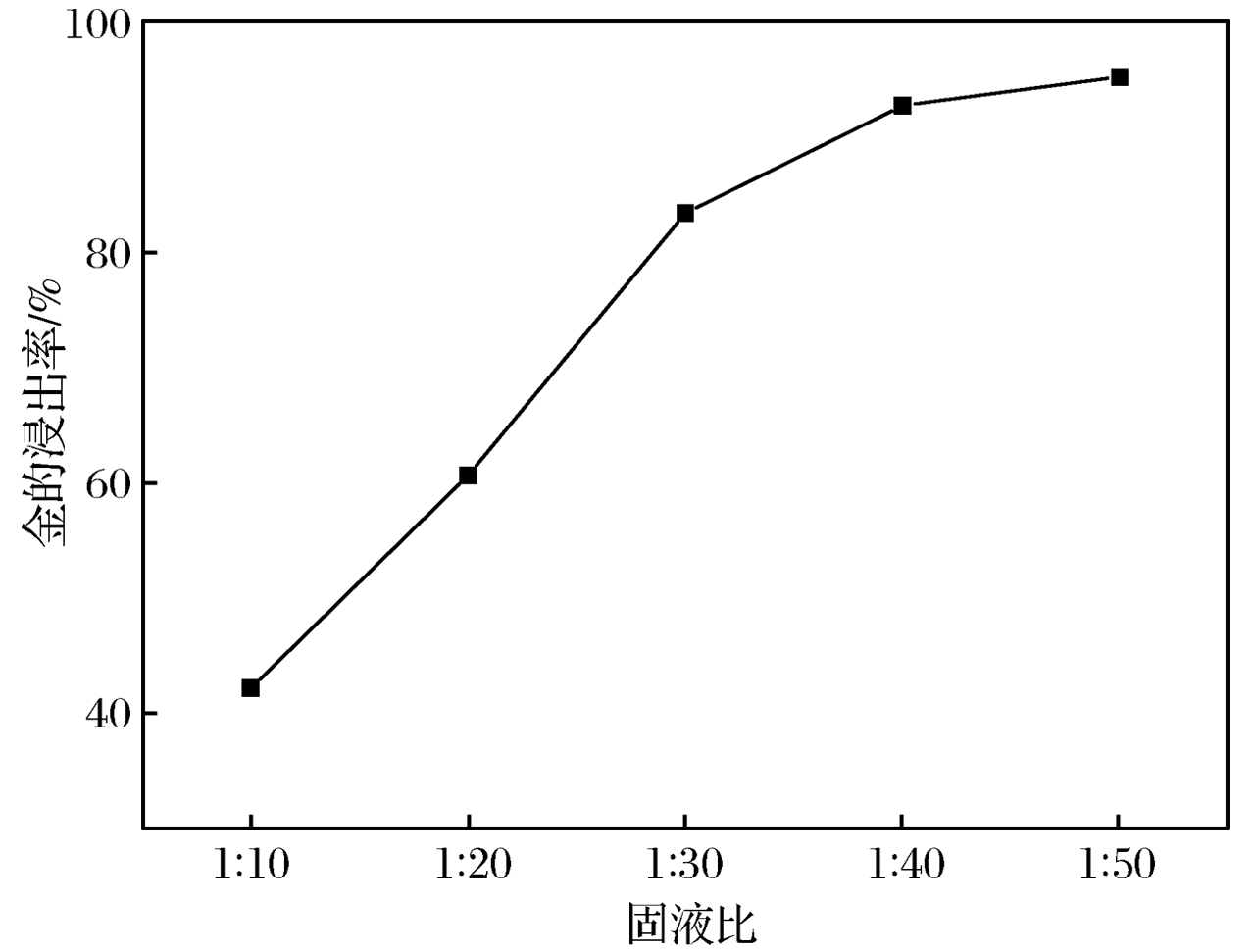
As early as 1980s,gold leaching with iodine has been intensely researched,but it has not been applied in industry due to the high cost.In recent years,with the appearing of the drawbacks of other hydrometallurgies such as aqua regia and cyanidation,the iodine leaching system has begun to attract people’s attention again.And many researchers use iodine leaching system to leach gold from the waste printed circuit board,but the high cost is still the main factor restricting its development.In order to reduce the cost and improve the leaching rate,cheaper ammonia was used as an auxiliary complex agent in the gold leaching from waste printed circuit board by iodine system.The orthogonal experiments of influential factors,such as the solid-liquid ratio,the molar ratio of I2/I-,I- concentration,ammonia concentration,eaction time were conducted.The single-factor experiments were conducted to obtain the optimum value of each factor when the gold leaching rate was the highest.The results show that at the optimal combination of various factors,the highest gold leaching rate can reach 98.6%.The solid-liquid ratio is the most significant influential factor on gold leaching,followed by the dosage of ammonia,the concentration of KI,and the molar ratio of I2/I-.The results of single-factor experiments show that the decrease of the solid-liquid ratio can improve the leaching rate.When pH value is between 8 and 9,molar ratio of I2/I- is 1∶8,KI concentration is 0.25 g/mL,the amount of ammonia is 1% (volume fraction),the temperature is 30 ℃,and the leaching time is 4 h,the efficiency of the hybrid system of gold leaching is best,and the highest leaching rate can reach 96%.The addition of ammonia has obvious promoting effect on leaching rate.Ammonia can be used as both complexing agent and auxiliary additive in gold leaching reaction,which can participate in the complexing reaction of gold and promote the transformation of I2 to I-.This has certain guiding significance for reducing the leaching cost and improving the leaching rate of the gold leaching system by iodine.




 甘公网安备 62010202000672号