


普朗铜矿是我国铜金属产量最大的超大型金属矿山,采用自然崩落法开采矿石(徐柱圆等,2025)。该采矿方法基于矿体内部发育的多节理裂隙结构特征和低强度力学特性,通过诱导工程促使矿石在重力作用下自然崩落,形成持续稳定的矿石流。这种兼具高效性与经济性的采矿工艺,在深部金属矿床开采中展现出独特优势,但采用自然崩落法开采矿石必然会引起地表移动和塌陷(孙伟等,2018;朱俊宁等,2024)。普朗矿区地表覆盖有较厚的第四系冰碛物,其成分复杂,粒级范围广,颗粒结构松散,黏聚力较小。采矿作业扰动极易引起冰碛物覆盖层失稳、变形和开裂,导致地表形成塌陷坑,且在运移崩落矿石的过程中,松散冰碛物会沿裂隙混入矿石,造成矿石贫化与损失(王少勇等,2024;杨朝义等,2024)。同时,冰碛物遇水会形成流动浆体,在重力作用下沿着地质构造和裂隙流入井下,造成井下泥石流灾害,严重影响矿山生产安全。普朗矿区雨季特大暴雨频发,雨季降雨量占全年降雨量的87.1%,这种极端降水条件导致泥石流灾害频发且防控难度大(牛向东等,2020;赵明亮等,2022;张应平等,2023)。因此,将冰碛物由“粉”变“块”,使其不易被搬运,从根本上阻断泥石流物源是降低普朗铜矿泥石流灾害发生概率和规模的根本途径。
注浆加固技术作为一种岩土工程改良手段,其核心机理在于将胶结材料制备成流动相浆体,并注入含砂、含水的松散地层或节理裂隙发育的岩体中,使浆体与岩体充分结合并发生固化反应,形成整体结构并提高岩体的力学性能(钱庄等,2016;汪文萍等,2018;叶飞等,2023)。该工艺通过改良地质体的微观结构特征,实现结构整体性提升和承载性能优化。工程实践证明,注浆技术在地下工程地质灾害防控体系中展现出显著的技术优越性(吴祥集等,2023;张玉增等,2024)。目前,众多学者开展的注浆研究表明,注浆压力对砂土可注性的提升作用有限,砂土可注性主要取决于注浆材料类型和颗粒质量分数,砂土级配越细,注浆后强度提升越显著,但需结合浆液颗粒浓度平衡可注性(沙飞等,2019)。砂土介质中浆液扩散模式受渗透系数、浆液参数和注浆工艺的协同控制,当砂土渗透系数较高时,浆液以渗透扩散为主,渗透系数降低则转为劈裂扩散(余永强等,2024)。在砂土注浆过程中,渗滤效应在水泥浆液扩散过程中导致水泥颗粒产生滞留封堵现象,是造成浆液扩散不均匀的根本原因,而脉动注浆通过动态压力调控可扩大渗滤作用范围,能够有效降低渗滤效应的影响,相比稳压注浆也更有利于形成加固圈和浆泡,但稳压注浆易形成局部劈裂浆脉(李术才等,2017;窦金熙等,2023)。研究表明,注浆后的砂土加固体呈现出空间各向异性,抗变形能力更强(秦鹏飞等,2024a)。
现有研究在注浆理论方面已取得丰硕成果,但这些成果主要是基于砂土和黏土介质的注浆研究。冰碛物是冰川搬运、堆积的石块和碎屑物质,与一般砂土层明显不同,其具有成分复杂、粒级分配广泛、结构松散、黏聚力小、均匀性差和渗透性弱等特征,属于特殊混合土质。鉴于冰碛物与常规砂土、黏土介质存在显著差异,现有注浆理论成果难以直接适用于普朗铜矿这类特殊工程条件,本文针对普朗铜矿原状冰碛物,自行设计研制室内注浆试验装置,选择水泥浆液开展注浆试验,研究注浆压力对水泥浆液注浆量、扩散距离、劈裂缝宽和劈裂通道的影响,揭示水泥浆液在冰碛物中的扩散规律及固化效果,为冰碛物注浆加固工程和塌陷坑地质灾害防治提供理论指导。
1 试验设计
为研究冰碛物在不同注浆压力下的注浆效果,试验设置了0.4,0.8,1.2,1.6,2.0 MPa共5个注浆压力梯度,注浆试验条件:含石率为50%,装样密度为2.5×10³ kg/m3,含水率为11.83%。
1.1 试验装置
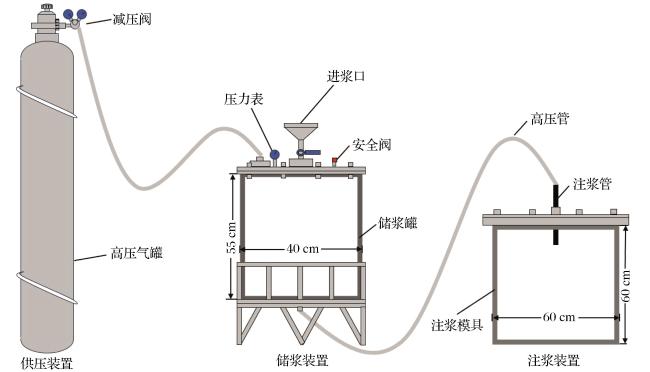
试验设计工况最大注浆压力为2.0 MPa,选用最大供压为8 MPa的氮气瓶作为供压设备,使用阈值为0~2.5 MPa的调节阀进行调节,实现注浆压力精准调控。储浆罐内径为40 cm,高度为55 cm,上部设置带有开合阀门的进浆口、阈值为3 MPa的安全泄压阀、压力表和供气口,下部设置金属稳定架和注浆管道。可拆卸立方体注浆模具规格为60 cm×60 cm×60 cm,模具外部使用口字钢进行焊接加固,采用卯榫结构连接四块边板,具有良好的操作性。注浆试验装置如图1所示。
1.2 试验材料
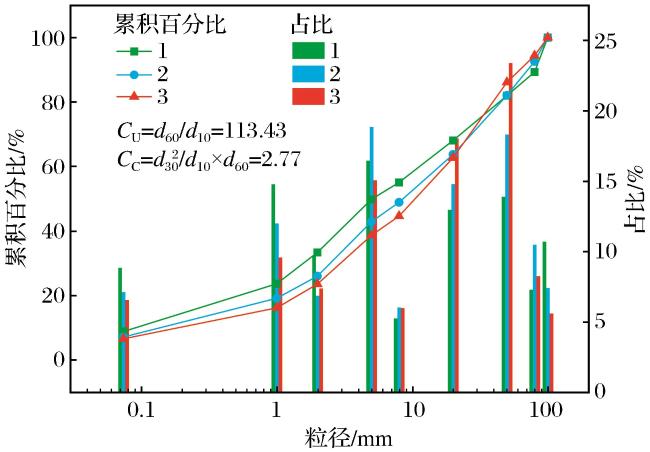
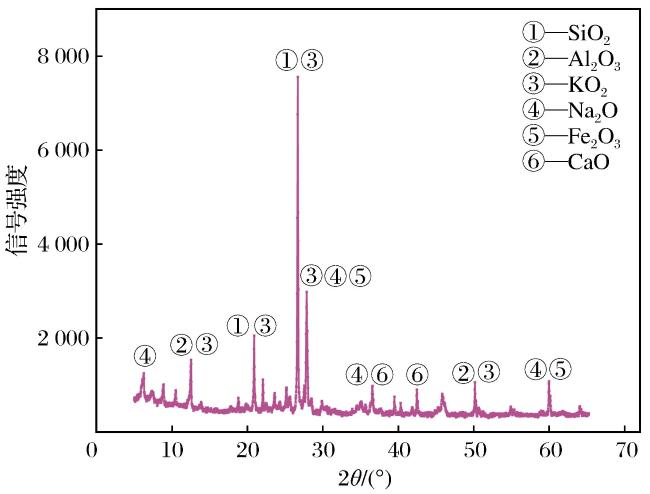
(1)注浆对象。本次试验所用冰碛物取自普朗铜矿。为了保证试验的准确性和代表性,选取3个现场试验点的原状冰碛物进行测试分析。冰碛物粒径分布特征如表1所示,物理性质如表2所示,冰碛物粒级组成曲线如图2所示,X射线粉晶衍射波谱图如图3所示。由表1和图2可知,普朗铜矿冰碛物主要为细颗粒,其中粒径约2 mm和15 mm的冰碛物颗粒占比分别为30%和60%。经计算,不均匀系数为113.43,曲率系数为2.77,表明该冰碛物级配良好,且颗粒尺寸存在较大差异。由图3可知,普朗铜矿冰碛物中SiO2含量最高,为56.10%,其次为Al2O3,占比为18.95%。由表2可知,冰碛物湿密度为2.5×10³ kg/m3,干密度为2.2×103 kg/m3,含水率为11.83%,孔隙率为17.6%,土壤的塑限为16.03%,液限为24.16%,为低液限粉质黏土,土壤渗透系数为6.75×10-5 cm/s,为弱透水量级。
表1 不同试验点冰碛物特征粒径Table 1 Characteristic particle sizes of moraines at different test sites |
| 试验点 | d 10/mm | d 30/mm | d 60/mm | C C | C U |
|---|---|---|---|---|---|
| 平均值 | 0.14 | 2.00 | 14.89 | 2.11 | 109.94 |
| 1 | 0.09 | 1.57 | 11.33 | 2.39 | 124.51 |
| 2 | 0.14 | 2.48 | 15.88 | 2.77 | 113.43 |
| 3 | 0.19 | 1.96 | 17.46 | 1.16 | 91.89 |
表2 原状地层基本性质Table 2 Basic properties of undisturbed strata |
| 参数 | 数值 |
|---|---|
| 湿密度/(kg·m-3) | 2.5×10³ |
| 干密度/(kg·m-3) | 2.2×10³ |
| 含水率/% | 11.83 |
| 孔隙率/% | 17.6 |
| 渗透系数/(cm·s-1) | 6.75×10⁻⁵ |
| 塑限/% | 16.03 |
| 液限/% | 24.16 |
(2)注浆材料。试验使用标准P.C32.5R水泥制备浆液,浆液密度为1.85 kg/m3,注浆量为5 kg。在注浆过程中,水泥浆液黏度会随着浆液的固化而升高,但变化幅度极小,可视为恒定黏度浆液。
1.3 试验步骤
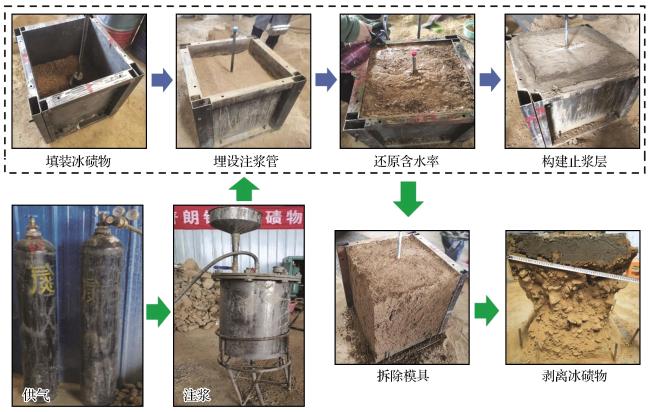
将注浆模具挡板清理干净后,将其紧密拼接组装,为避免注浆过程中发生反浆问题,需在模具挡板内壁均匀涂抹凡士林。将试验冰碛物含水率还原至11.83%,装入模具逐层夯实,并在每层冰碛物表面刻划痕防止夯实冰碛物分层,填装高度至30 cm时埋入注浆管,继续填装冰碛物直至填满模具。在填装过程中,根据实际情况进行少量洒水,维持冰碛物含水率。填装完毕后,在模具表面铺水泥构建止浆层,密封被注冰碛物,将注浆设备出浆管接入注浆管,开启氮气瓶输出压力,启动注浆作业。观察到模具冒浆后关闭气阀,停止注浆,注浆结束24 h后拆除模具挡板,剥离未固结冰碛物,得到注浆结石体。注浆试验流程如图4所示。
2 试验结果及分析
2.1 冰碛物水泥注浆基本机理
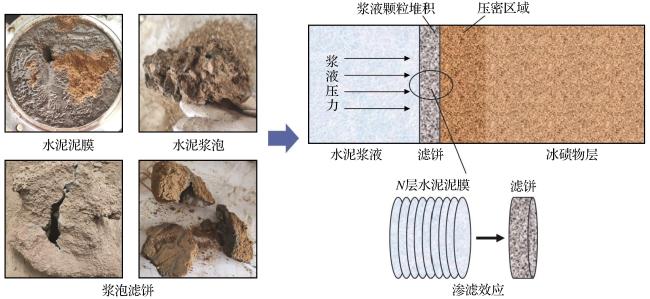
水泥浆液作为典型的颗粒型浆液,注入冰碛物后,其内部丰富的孔隙结构会对水泥颗粒产生吸附和截留作用。在浆液运移扩散过程中,水泥颗粒在冰碛物孔隙内沉积并形成层状泥膜,进而堵塞孔隙通道。随着注浆持续推进,若干层泥膜逐渐堆叠形成具有一定厚度的滤饼层,导致后续注浆难度增大(宋洋等,2023a,2023b)。如图5所示,该现象称为渗滤效应,其本质是颗粒沉积与孔隙封堵共同作用的结果。
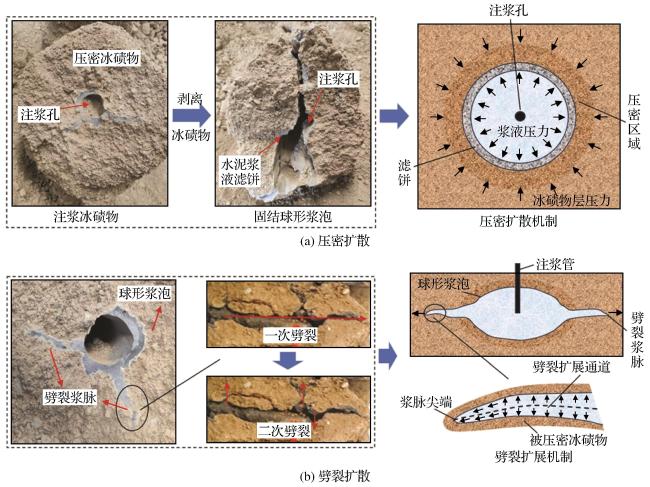
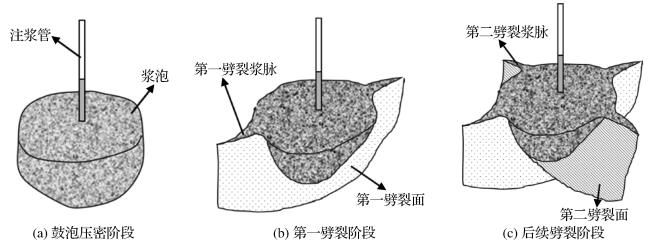
当注浆压力提高到一定程度时,冰碛物薄弱界面率先开裂形成劈裂通道(雷金山等,2010;秦鹏飞,2017),水泥浆液随即充填其中,形成主劈裂浆脉,扩散方式由压密扩散转变为劈裂扩散,如图6(b)所示。主劈裂浆脉以注浆孔为中心向运移方向不断延伸至锋面处,形成近浆泡端厚、锋面端薄的板状构造。随着注浆压力持续提升,冰碛物其他薄弱部位将产生次级劈裂,形成次劈裂浆脉,其形态特征与主劈裂浆脉相似,均呈现近端厚、远端薄的渐变分布,通常次劈裂浆脉延伸长度小于主劈裂浆脉(周茗如等,2023)。由图6(b)可以看出,随着注浆进行,浆脉对周围冰碛物不断产生挤压作用,推动浆脉厚度和长度增长。当应力累积至临界值时,浆脉会发生二次劈裂,衍生细小分支结构,最终形成复杂的浆脉网络骨架。
2.2 注浆压力对注浆量的影响
2.3 注浆压力对扩散半径的影响
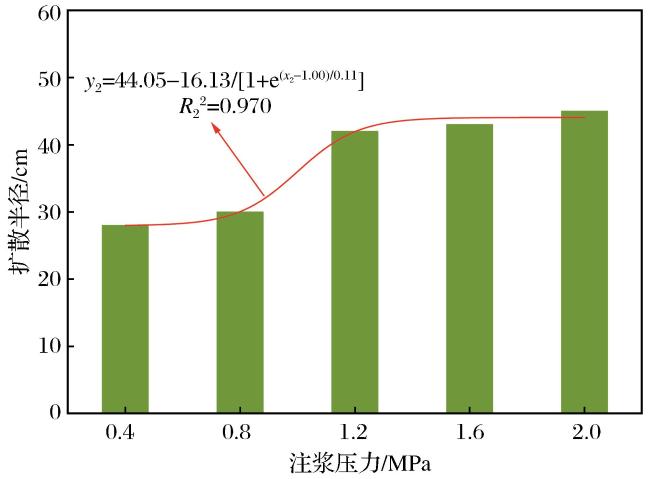
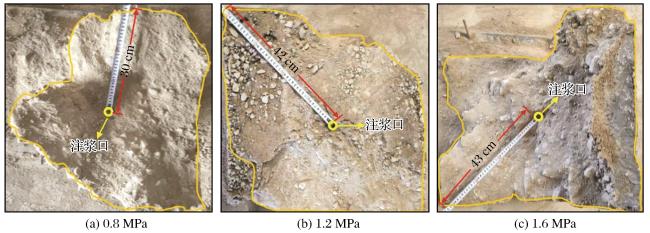
以注浆压力1.2 MPa为分界点,试验现象出现较明显差异,注浆压力为0.4 MPa与注浆压力为0.8 MPa的试验现象相似,注浆压力为1.6 MPa与注浆压力为2.0 MPa的试验现象相似,因此选取0.8 MPa、1.2 MPa和1.6 MPa压力条件下的试验现象进行分析。图10所示为不同注浆压力下扩散半径试验结果。
2.4 注浆压力对劈裂缝宽的影响
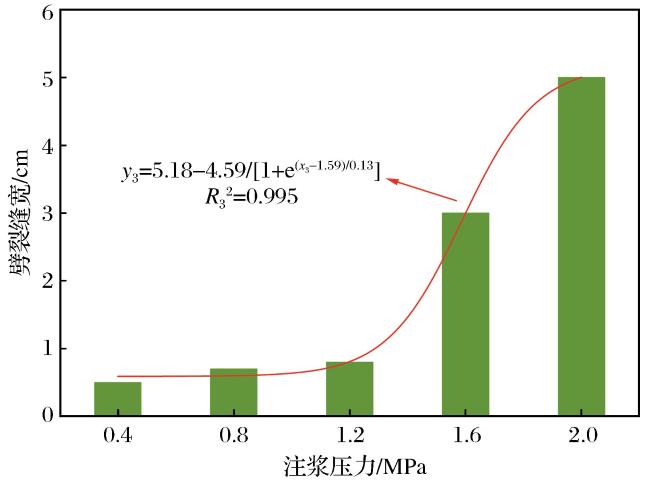
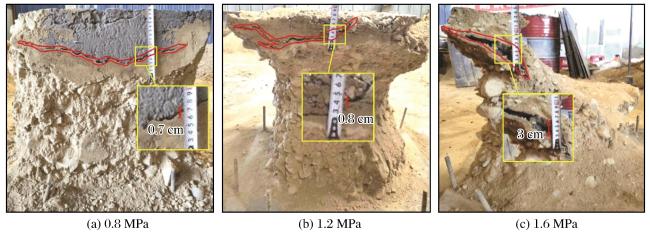
2.5 注浆压力对劈裂通道的影响
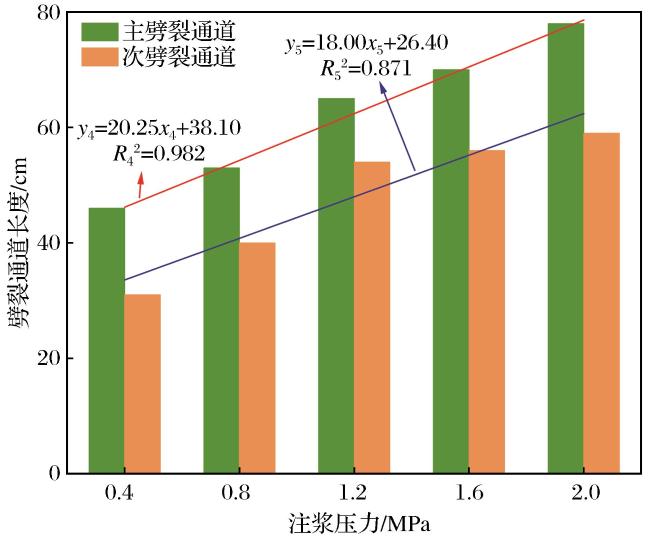
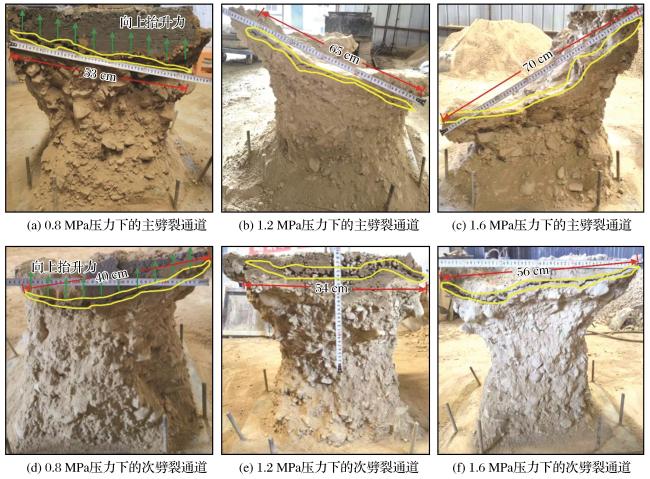
图13所示为不同注浆压力下的劈裂通道长度。水泥浆液扩散时会将冰碛物严重破坏形成2条较为明显的劈裂通道,分别为主劈裂通道和次劈裂通道。由图13可知,2条劈裂通道的长度均与注浆压力呈正相关关系,主劈裂通道遵循一元线性函数y 4=20.25x 4+38.10递增规律,次劈裂通道遵循一元线性函数y 5=18.00x 5+26.40递增规律。主劈裂通道长度大于次劈裂通道长度,且增长速度大于次劈裂通道,这是由于冰碛物多孔隙的自然结构性,注浆初期浆液在扩散过程中受冰碛物阻力较小,对冰碛物的压密作用明显,扩散距离大,主劈裂通道较长。随着注浆进行,冰碛物密实度提高,孔隙率降低,浆液在扩散过程中受到的冰碛物阻力变大,后续产生的次劈裂通道长度比主劈裂通道短。
2.6 冰碛物水泥注浆前后SEM微观分析
取普朗铜矿原状冰碛物和水泥注浆后的冰碛物养护7 d,通过电子显微镜扫描对冰碛物的细观结构和作用机理展开观测和对比分析。
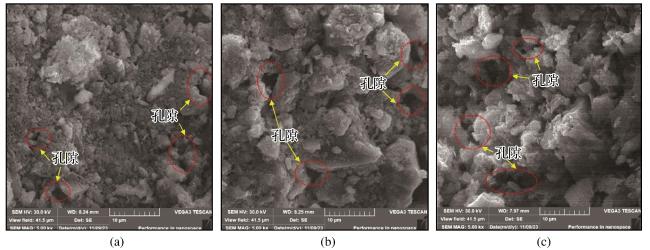
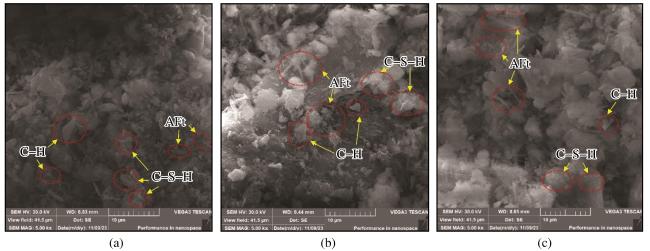
图15和图16所示分别为原状冰碛物和注浆冰碛物养护7 d后放大5 000倍的电镜照片。由图15可知,原状冰碛物由大小不一的颗粒堆积而成,其结构松散,孔隙丰富,颗粒间联结不紧密。由图16可知,注浆后的冰碛物中出现大量六方形薄片状晶体、团絮状凝胶物质以及针状和棒状物质,这些物质与冰碛物颗粒紧密联结在一起,冰碛物孔隙大量减少(Andres et al,2015;金炜枫等,2016)。其原因是,在注浆过程中,水泥发生水化反应,生成大量薄片状氢氧化钙晶体(C-H)、絮状水化硅酸钙凝胶(C-S-H)以及针状和棒状的钙矾石矿物(Aft)。这些水化产物的结构和形态对冰碛物性能产生了重要影响。针状钙矾石、棒状晶体、大量片状和纤维状、团絮状的凝胶相互交织搭建,不仅填充了冰碛物的孔隙,而且与冰碛物颗粒有序联结,构成了一个牢固、密实的三维空间体系,使冰碛物从疏松的孔隙结构转变为致密的团状结构。
2.7 冰碛物水泥注浆的工程化建议
在冰碛地层注浆施工中,注浆压力的控制是实现高效加固的关键,可根据实际工程对注浆量、扩散半径和劈裂效果的需求,分阶段控制注浆压力(李鹏等,2018)。注浆初期采用较低注浆压力进行压密扩散,通过浆泡挤压冰碛物形成压密加固区,提升冰碛物强度。当注浆速率显著下降且扩散半径增速衰减时,可以通过提升注浆压力至启劈压力以上,引导浆液沿薄弱面定向劈裂,快速形成宽幅浆脉骨架和长距离劈裂通道,利用浆液抬升力主动补偿地层沉降。同时,通过浆脉延伸突破渗滤效应限制,扩展冰碛物加固范围,待劈裂通道形成后,适当回调注浆压力至稳定扩散区间,维持裂缝扩展动能,进一步压密深层冰碛物。在低压段保持连续注浆,强化压密效应,在高压段实施脉冲式加压,降低滤饼沉积速率,通过“压密—劈裂”协同作用构建多层次加固体系,形成以注浆口为核心、兼具密实区域和辐射状浆脉骨架的复合加固结构,显著提升冰碛物的整体稳定性。
3 结论
通过对冰碛物进行水泥注浆试验,进一步分析冰碛物中水泥浆液的扩散规律及水泥浆液对冰碛物的固化效果,得到以下主要结论:
(1)水泥浆液在冰碛物中的扩散运动主要表现为压密扩散和劈裂扩散2种形式,受渗滤效应影响,水泥浆液在冰碛物中无法实现渗透扩散。
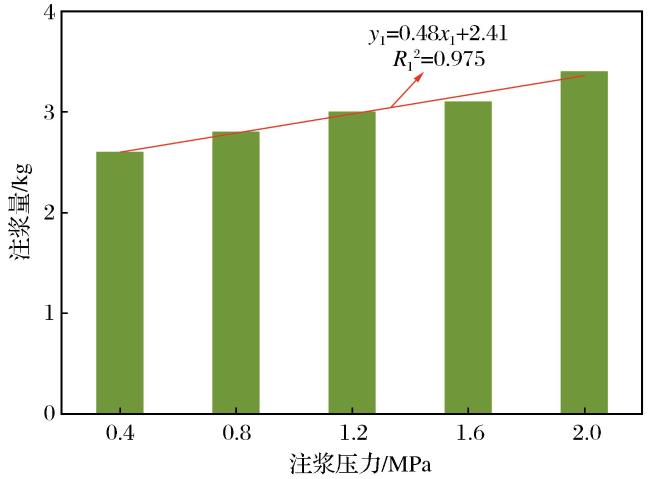
(2)在注浆过程中,水泥浆液的注浆量、扩散距离、劈裂缝宽和劈裂通道长度均与注浆压力呈正相关关系。
(3)在注浆过程中,水泥浆液对冰碛物具有明显的抬升作用,浆液通过对冰碛物的压密和劈裂作用,进而产生向上的抬升力,减少冰碛物的沉降。
(4)水泥浆液对冰碛物的注浆固化效果主要有2个方面:一是压密作用,注浆压密使冰碛物的密实度增加,提高了冰碛物的强度;二是骨架支撑作用,水泥浆脉能够支撑和限制周围冰碛物变形,具有骨架支撑作用。

 甘公网安备 62010202000672号


